Software has changed dramatically over the last two decades. In the past, businesses and individuals had to buy software, install it on a computer, and update it manually whenever a new version was released. Today, there is a much easier solution known as Software as a Service, commonly called SaaS.
If you have ever used Google Docs, Microsoft 365, Zoom, Dropbox, Canva, or Salesforce through your web browser, you have already experienced SaaS software.
But many people still ask, “what is saas software?” The answer is simple. SaaS software allows users to access applications through the internet without installing or maintaining the software on their own computers.
This guide explains everything you need to know about SaaS software in simple language. Whether you are a student, business owner, freelancer, or IT professional, this article will help you understand how SaaS works, why it is popular, its advantages, disadvantages, security, pricing, and future trends.
By the end of this guide, you will understand why SaaS has become one of the fastest-growing technology models in the world.
What Is SaaS Software?
The exact answer to the question “what is saas software” is straightforward.
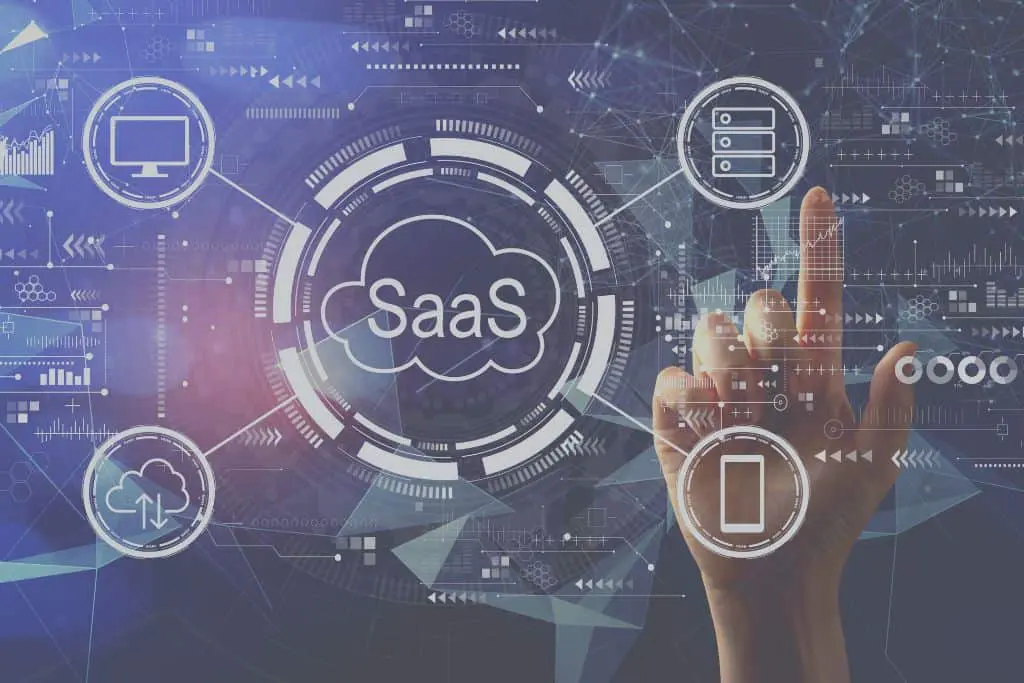
SaaS stands for Software as a Service. It is a cloud-based software delivery model where users access applications over the internet instead of installing them on their computers.
Instead of buying software once and installing it manually, users subscribe to the software. The provider hosts the application, manages servers, performs updates, fixes bugs, and keeps the software running.
Users simply sign in through a web browser or mobile app.
For example:
- Gmail
- Microsoft 365
- Zoom
- Canva
- Slack
- Dropbox
- Salesforce
- HubSpot
- Shopify
- QuickBooks Online
All of these are SaaS applications.
Instead of downloading large installation files, you simply create an account and begin using the software.
This convenience explains why millions of businesses are moving to SaaS every year.
What Is Software as a Service SaaS?
Many people search for the phrase “what is software as a service saas.”
Software as a Service (SaaS) is one of the three primary cloud computing models.
The three models include:
- Software as a Service (SaaS)
- Platform as a Service (PaaS)
- Infrastructure as a Service (IaaS)
Among these, SaaS is the easiest for everyday users because it requires almost no technical setup.
Everything—including storage, servers, maintenance, updates, and security—is managed by the software company.
Also Read: What Is Docker Software Dev? The Complete Beginner-to-Expert Guide for Modern Software Development
The customer only needs:
- Internet access
- A web browser
- Login credentials
This makes SaaS ideal for businesses of every size.
How SaaS Software Works
Understanding how SaaS works is surprisingly simple.
Here is the complete process.
Step 1: The Provider Builds the Software
A software company develops an application.
Examples include:
- Customer Relationship Management (CRM)
- Accounting software
- Email platforms
- Project management software
- Video conferencing apps
Step 2: The Software Is Hosted in the Cloud
Instead of installing the software on your computer, it runs on cloud servers located in secure data centers.
These servers are maintained by the SaaS provider.
Step 3: Users Subscribe
Customers create an account.
They usually pay:
- Monthly
- Yearly
- Per user
- Usage-based
Some SaaS platforms even offer free versions.
Step 4: Login Through the Internet
Users simply visit a website or mobile app.
No installation is needed.
Step 5: Automatic Updates
Whenever the provider improves the software, every customer automatically receives the latest version.
No downloads.
No manual updates.
No technical work.
The History of SaaS Software
Although SaaS feels modern, its roots go back many decades.
1960s
Large organizations used centralized computers.
Employees accessed software through connected terminals.
1990s
The internet became widely available.
Companies began experimenting with web-based software.
Early 2000s
Broadband internet improved.
Businesses realized software could be delivered online instead of CDs.
Salesforce became one of the first successful SaaS companies.
2010–2020
Cloud computing exploded.
Thousands of SaaS startups entered the market.
Businesses embraced remote work.
2020–2026
Artificial intelligence transformed SaaS.
Today’s SaaS platforms include:
- AI writing
- AI customer support
- AI analytics
- Automation
- Machine learning
- Smart recommendations
Modern SaaS is far more intelligent than ever before.
Main Features of SaaS Software
SaaS software offers several characteristics that distinguish it from traditional applications.
Cloud-Based Access
Everything runs online.
Users can work from anywhere.
Subscription Pricing
Instead of buying software forever, customers pay recurring subscriptions.
This lowers upfront costs.
Automatic Updates
New features appear automatically.
Users never install patches manually.
Multi-Device Support
One account works across:
- Desktop
- Laptop
- Tablet
- Smartphone
Data Backup
Most SaaS providers automatically back up customer data.
This reduces the risk of data loss.
Scalability
Businesses can easily add:
- New employees
- More storage
- Additional features
There is no need to purchase new hardware.
Collaboration
Multiple users can work together in real time.
Examples include:
- Editing documents
- Managing projects
- Sharing files
- Team communication
This is one reason SaaS is extremely popular among remote teams.
Benefits of SaaS Software
Businesses continue adopting SaaS because it solves many common software problems.
Lower Initial Costs
Traditional software often requires expensive licenses.
SaaS spreads costs through affordable subscriptions.
Small businesses especially benefit from this pricing model.
Faster Deployment
New software can often be used within minutes.
There is no lengthy installation process.
Work From Anywhere
Employees can access applications from:
- Home
- Office
- Airport
- Coffee shop
- Hotel
As long as internet access is available.
Automatic Maintenance
The provider handles:
- Bug fixes
- Security updates
- Performance improvements
- Server maintenance
Businesses save both time and money.
Easy Collaboration
Cloud-based collaboration improves productivity.
Everyone works with the latest version of documents.
No more emailing multiple file versions.
Better Security
Leading SaaS providers invest heavily in:
- Encryption
- Monitoring
- Disaster recovery
- Security testing
- Data centers
- Identity management
Most small businesses cannot match this level of security on their own.
Also Read: What Is CMS Software? The Complete Beginner’s Guide to Content Management Systems
High Availability
Most leading SaaS providers guarantee uptime above 99.9%.
This means software remains available almost all the time.
Easy Scaling
Need 500 new employees?
Simply purchase additional user licenses.
No expensive infrastructure upgrades.
Drawbacks of SaaS Software
Despite its many advantages, SaaS is not perfect.
Understanding its limitations helps businesses make informed decisions.
Internet Dependency
Without internet access, many SaaS applications cannot function.
Although some platforms offer offline modes, internet connectivity remains important.
Subscription Costs
Monthly payments may seem affordable.
However, over many years, subscription fees can exceed the one-time cost of traditional software.
Less Customization
Some SaaS platforms limit advanced customization.
Businesses with unique workflows may need specialized solutions.
Vendor Lock-In
Moving from one SaaS provider to another can be difficult.
Data migration sometimes requires significant planning.
Data Privacy Concerns
Sensitive business information is stored on external servers.
Organizations should carefully review:
- Privacy policies
- Compliance certifications
- Security standards
before choosing a SaaS provider.
SaaS vs Traditional Software
Understanding the differences helps businesses choose the right option.
| Feature | SaaS Software | Traditional Software |
| Installation | None | Required |
| Updates | Automatic | Manual |
| Cost | Subscription | One-time purchase |
| Access | Internet | Local computer |
| Maintenance | Provider | Customer |
| Scalability | Easy | Limited |
| Collaboration | Excellent | Often limited |
| Hardware | Minimal | Often required |
For most businesses today, SaaS provides greater flexibility, especially for remote teams and growing organizations.
SaaS vs PaaS vs IaaS
Cloud computing includes three major service models.
SaaS
Designed for end users.
Examples include:
- Microsoft 365
- Zoom
- Dropbox
- Canva
PaaS
Provides a platform for developers to build applications.
Developers manage the code while the provider manages the infrastructure.
IaaS
Offers virtual servers, storage, and networking resources.
Customers manage operating systems and applications while the provider manages the physical hardware.
In simple terms:
- SaaS = Use software.
- PaaS = Build software.
- IaaS = Rent infrastructure.
Popular Examples of SaaS Software
Many of the world’s most recognized digital tools operate as SaaS applications.
Productivity
- Google Workspace
- Microsoft 365
- Notion
Communication
- Zoom
- Slack
- Microsoft Teams
Marketing
- HubSpot
- Mailchimp
- Semrush
Customer Relationship Management
- Salesforce
- Zoho CRM
- Pipedrive
Accounting
- QuickBooks Online
- Xero
- FreshBooks
Design
- Canva
- Figma
- Adobe Express
E-commerce
- Shopify
- BigCommerce
These platforms allow users to begin working almost immediately without complicated installation or maintenance.
Industries That Use SaaS Software
Nearly every industry now relies on SaaS solutions to improve productivity, reduce costs, and support remote work.
Some of the biggest adopters include:
Healthcare
Hospitals and clinics use SaaS for:
- Electronic health records
- Appointment scheduling
- Patient communication
- Telehealth services
Education
Schools and universities depend on SaaS for:
- Online classrooms
- Learning management systems
- Assignment tracking
- Collaboration tools
Finance
Banks, accountants, and financial firms use SaaS for:
- Accounting
- Expense management
- Payroll
- Financial reporting
- Customer relationship management
Retail and E-commerce
Retail businesses use SaaS to manage:
- Online stores
- Inventory
- Customer support
- Marketing automation
- Payment processing
Manufacturing
Manufacturers rely on SaaS for:
- Supply chain management
- Production planning
- Inventory tracking
- Quality control
Real Estate
Real estate agencies use SaaS for:
- Property management
- Customer databases
- Digital contracts
- Marketing campaigns
As cloud technology continues to evolve, SaaS adoption is expected to grow across virtually every sector of the economy.
How to Choose the Right SaaS Software
Choosing the right SaaS platform is an important decision for any business. While there are thousands of SaaS applications available today, not every solution will fit your needs.
Before subscribing to any platform, consider these factors.
Identify Your Business Needs
Start by asking yourself a few simple questions.
- What problem am I trying to solve?
- Who will use the software?
- How many users will need access?
- What features are essential?
- What is my monthly budget?
Having clear answers makes it easier to compare different SaaS products.
Evaluate Ease of Use
Even the most powerful software can become a burden if it is difficult to use.
Look for software that offers:
- A clean interface
- Simple navigation
- Helpful tutorials
- Good customer support
- Mobile accessibility
An easy-to-use platform reduces training time and increases employee productivity.
Check Integration Options
Modern businesses often use multiple software tools.
Choose SaaS software that integrates with applications such as:
- Microsoft 365
- Google Workspace
- Slack
- Zoom
- Salesforce
- QuickBooks
- Shopify
Good integrations reduce manual work and improve efficiency.
Review Security Standards
Security should never be overlooked.
Reliable SaaS providers usually offer:
- Data encryption
- Multi-factor authentication (MFA)
- Role-based access control
- Automatic backups
- Compliance certifications
- Regular security testing
Always review the provider’s security documentation before making a decision.
Understand the Pricing Structure
Some SaaS companies advertise low prices but charge extra for important features.
Review:
- Monthly cost
- Annual discounts
- Storage limits
- User limits
- Premium features
- Support plans
Understanding the complete pricing model helps avoid unexpected costs.
SaaS Pricing Models Explained
One reason SaaS software has become so popular is its flexible pricing.
Here are the most common pricing models.
Free Plan
Many SaaS providers offer a basic version at no cost.
Examples include:
- Canva Free
- Dropbox Basic
- Trello Free
These plans are suitable for individuals and small teams.
Subscription Pricing
This is the most common SaaS model.
Customers pay:
- Monthly
- Quarterly
- Annually
This approach provides predictable expenses.
Per User Pricing
The business pays for each employee who uses the software.
Example:
20 employees × $20 per month = $400 monthly.
Usage-Based Pricing
Some SaaS companies charge based on actual usage.
Examples include:
- Number of emails sent
- Storage consumed
- API requests
- AI credits used
This model benefits businesses with changing workloads.
Tiered Pricing
Many SaaS providers offer several plans.
Typical structure:
- Basic
- Professional
- Business
- Enterprise
Businesses can upgrade as they grow.
How Secure Is SaaS Software?
One of the biggest concerns people have when asking “what is saas software” is security.
The good news is that leading SaaS providers invest heavily in protecting customer data.
Security often exceeds what small businesses can achieve on their own.
Common security measures include:
Data Encryption
Information is encrypted both while being transmitted and while stored.
This prevents unauthorized access.
Regular Backups
Automatic backups help protect against:
- Hardware failure
- Human error
- Cyberattacks
- Natural disasters
Multi-Factor Authentication
Users verify their identity using more than just a password.
This greatly reduces account compromise.
Access Controls
Administrators control exactly who can access specific information.
This protects sensitive business data.
Continuous Monitoring
Most enterprise SaaS companies monitor their systems 24 hours a day.
Potential threats are detected and addressed quickly.
Common Challenges of SaaS Software
Although SaaS offers many benefits, businesses should prepare for a few challenges.
Internet Outages
Without an internet connection, cloud applications may become unavailable.
Businesses should have backup internet options whenever possible.
Changing Subscription Costs
Providers sometimes adjust pricing.
Companies should review contracts carefully before committing.
Learning New Software
Switching from traditional software to SaaS may require employee training.
Fortunately, most modern SaaS platforms are designed with user-friendly interfaces.
Data Migration
Moving information from old software to a new SaaS platform can take time.
Planning the migration carefully helps minimize disruptions.
Artificial Intelligence Is Transforming SaaS
Artificial Intelligence (AI) has become one of the biggest innovations in SaaS software.
Instead of simply storing information, modern SaaS platforms can now analyze data, automate tasks, and provide intelligent recommendations.
Examples include:
- AI writing assistants
- AI chatbots
- Predictive analytics
- Smart customer support
- Automated marketing campaigns
- Intelligent reporting
- Sales forecasting
AI saves businesses countless hours by handling repetitive work automatically.
As AI technology improves, SaaS platforms will become even smarter and more personalized.
Future Trends in SaaS Software
The SaaS industry continues to evolve rapidly. Several trends are shaping its future.
More AI Integration
AI will become a standard feature rather than an optional add-on.
Businesses will expect intelligent automation in every application.
Low-Code and No-Code Development
More SaaS platforms now allow users to build workflows and applications without programming knowledge.
This empowers non-technical users to solve business problems quickly.
Greater Personalization
Future SaaS applications will adapt to individual users by learning their preferences and work habits.
Industry-Specific SaaS Solutions
Instead of one-size-fits-all software, more companies are creating SaaS products for specific industries such as healthcare, legal services, construction, education, and manufacturing.
Enhanced Cybersecurity
As cyber threats become more advanced, SaaS providers will continue investing in stronger authentication, encryption, and compliance measures.
Also Read: What Is Enterprise Software? The Enterprise Software, Benefits, Types, Examples, and…
Understanding Specialized SaaS Terms
People often search for niche phrases related to SaaS. Here are two examples.
Dope Marketing SaaS Software What Is It?
The search term “dope marketing saas software what is it” generally refers to SaaS platforms designed to improve digital marketing efforts.
These tools may include features such as:
- Email marketing
- Search engine optimization (SEO)
- Social media scheduling
- Customer relationship management
- Marketing automation
- Analytics and reporting
- Lead generation
While “Dope Marketing SaaS” is not a widely recognized industry category, the phrase is commonly used when discussing modern cloud-based marketing platforms that help businesses attract and retain customers more efficiently.
Pylon Software SaaS What Is It?
The phrase “pylon software saas what is it” usually refers to Pylon, a SaaS platform that helps businesses manage customer support and customer success.
Cloud-based customer support platforms like Pylon allow companies to:
- Manage customer conversations
- Track support requests
- Improve customer satisfaction
- Organize communication
- Automate repetitive support tasks
Like many SaaS applications, these platforms are accessible through a web browser and require little to no local installation.
Common Myths About SaaS Software
Many misconceptions still exist about SaaS.
Let’s separate fact from fiction.
Myth 1: SaaS Is Only for Large Businesses
False.
Many SaaS products are designed specifically for freelancers, startups, and small businesses.
Myth 2: SaaS Is Less Secure
False.
Leading SaaS providers often invest far more in security than individual businesses can afford.
Myth 3: SaaS Is Expensive
Not necessarily.
Many SaaS applications offer affordable monthly plans and free versions.
Myth 4: SaaS Requires Technical Knowledge
False.
Most SaaS applications are designed for everyday users with little technical experience.
Myth 5: SaaS Cannot Scale
False.
Scalability is one of SaaS software’s biggest advantages.
Businesses can easily add users, storage, and features as they grow.
Expert Insights
SaaS has fundamentally changed how organizations purchase and use software. Rather than making large upfront investments in hardware and software licenses, businesses can access enterprise-grade applications through predictable subscription models.
One of the most important advantages of SaaS is its ability to let organizations focus on their core business instead of maintaining IT infrastructure. Automatic updates, cloud accessibility, and continuous innovation make SaaS an attractive choice for companies of all sizes.
Looking ahead, the combination of SaaS and artificial intelligence is expected to create even more intelligent, automated, and personalized software experiences.
Frequently Asked Questions (FAQs)
Can SaaS software work without the internet?
Some SaaS applications offer limited offline functionality, but most require an internet connection to access all features and synchronize data.
Is SaaS only available through a web browser?
No. Many SaaS providers also offer desktop and mobile apps that connect to their cloud services.
Can I cancel a SaaS subscription anytime?
Many providers allow monthly subscriptions that can be canceled at any time, while annual plans may have different terms.
Who owns the data stored in SaaS software?
In most cases, customers retain ownership of their data, while the SaaS provider stores and manages it according to the service agreement.
Can small businesses benefit from SaaS?
Yes. SaaS is especially valuable for small businesses because it reduces upfront costs and minimizes IT maintenance.
How often is SaaS software updated?
Updates vary by provider, but many SaaS companies release improvements continuously without interrupting users.
Is SaaS suitable for personal use?
Absolutely. Many individuals use SaaS applications for email, document editing, graphic design, cloud storage, budgeting, and productivity.
Can multiple people use the same SaaS platform?
Yes. Most SaaS platforms support collaboration with user accounts, permissions, and shared workspaces.
Final Thoughts
If you have been wondering “what is saas software,” the answer is simple: it is software delivered over the internet as a service rather than installed on a local computer. This model has transformed how individuals and organizations access technology by making software more affordable, scalable, and easier to maintain.
From productivity tools and accounting platforms to customer relationship management and AI-powered applications, SaaS has become the foundation of modern digital business. Its subscription-based pricing, automatic updates, cloud accessibility, and collaborative features make it an excellent choice for organizations of every size.
As cloud computing and artificial intelligence continue to advance, SaaS software will become even more capable, secure, and intelligent. Businesses that understand and adopt the right SaaS solutions today will be better prepared for tomorrow’s increasingly connected and technology-driven world.