If you have ever stopped while writing and wondered whether the correct spelling is “definitely” or “definately,” you are not alone. This is one of the most common spelling questions in English. Many people write “definately” because the word sounds as if it might contain the letters “a” and “e” in that order.
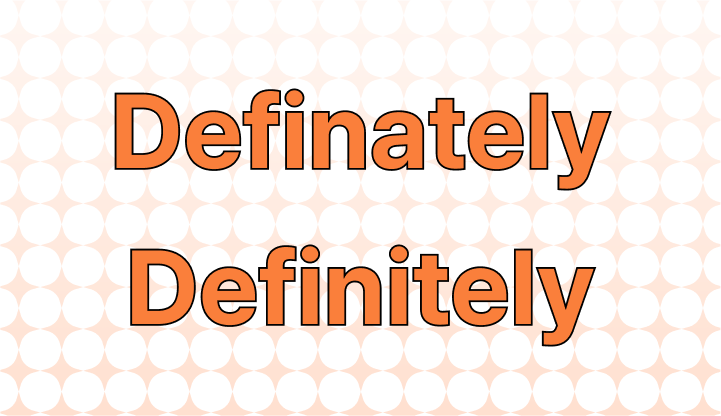
The correct spelling is definitely.
“Definately” is a common misspelling, but it is not the standard English spelling. The same is true for related incorrect forms such as “definatly,” “definitly,” “definetely,” “definetly,” “definatley,” “definitelly,” “definetelly,” “defenitely,” “definitley,” “definatelly,” and similar variations.
The word definitely is an adverb that means “without doubt,” “certainly,” or “in a way that is certain.” Cambridge Dictionary defines definitely as meaning “without any doubt,” while Oxford Learner’s Dictionaries explains that it is used to emphasize that something is true and that there is no doubt about it.
For American English users, students, professionals, job applicants, bloggers, and anyone writing online, knowing the difference between definitely and definately is useful because correct spelling improves clarity and credibility.
Quick Answer: Definitely or Definately?
The correct spelling is definitely.
The incorrect spelling is definately.
Here is the simple rule:
- Correct: definitely
- Incorrect: definately
- Correct: “I will definitely be there.”
- Incorrect: “I will definately be there.”
A helpful way to remember the spelling is to connect definitely with the word definite.
Think:
definite → definitely
The base word contains “nite,” not “nate.”
So, when you add “-ly,” you get:
definite + ly = definitely
This simple connection can help prevent the common mistake.
What Does Definitely Mean?
Definitely is an adverb used to express certainty. It tells the reader or listener that the speaker feels sure about something.
For example:
“I definitely want to visit New York.”
This means the speaker is certain about wanting to visit New York.
Another example is:
“She definitely finished the assignment.”
This means the speaker is certain that she finished it.
Cambridge Dictionary describes definitely as “without any doubt” and lists certainly as a close synonym. Oxford also explains that definitely can be used to emphasize that something is true or certain.
In everyday American English, definitely is common in both conversation and writing.
You might hear:
“Are you coming?”
“Definitely!”
You might also see:
“The company definitely needs a better plan.”
In both cases, the word communicates strong certainty.
Definitely Is the Correct Standard Spelling
If you are deciding between definitely and definately, choose definitely.
Dictionaries recognize definitely as the standard English word. Major learner dictionaries provide entries for definitely and describe its meaning, pronunciation, and use.
“Definately” is different. It is generally treated as a spelling mistake rather than an alternative spelling.
This distinction matters because English contains many words whose spellings are not obvious from their pronunciation. A person may know exactly what they want to say but still make a spelling error because English spelling does not always match spoken sounds perfectly.
That is one reason the definitely versus definately question appears so often.
Why Do People Spell Definitely as Definately?
There are several reasons.
First, pronunciation can make the spelling difficult.
In American English, definitely is commonly pronounced approximately as “DEF-uh-nit-lee.” Cambridge gives the U.S. pronunciation as /ˈdef.ə.nət.li/.
When people hear the word, they may not clearly hear every vowel in the middle. This can make it tempting to write “definately.”
Second, English has many words that contain “-ate-” and “-ately,” so writers may unconsciously apply a familiar spelling pattern.
Third, the word is often typed quickly. On phones, tablets, and computers, a person may type the first version that seems right and continue writing.
Fourth, “definately” is widely seen online. Repeated exposure to an incorrect spelling can make it look familiar. When a misspelled word appears often enough, people may begin to assume that it is correct.
This is an important lesson about digital writing: frequency does not always equal correctness.
A word appearing thousands of times online does not automatically make it a standard spelling.
The Easy Way to Remember Definitely
One of the best spelling tricks is to remember the word definite.
Start with:
definite
Then add:
-ly
The result is:
definitely
You can break it down like this:
definite + ly = definitely
The important part is “definite.”
If you remember “definite,” you are much less likely to write “definately.”
Another memory trick is:
There is a definite “ite” in definitely.
You can also think:
“If it is definite, it is definitely true.”
For example:
“The answer is definite.”
“The answer is definitely correct.”
This connects the adjective definite with the adverb definitely.
Also Read: Snapjotz Com: A Complete Guide, Review, Safety Check,…
Definitely vs. Definately: A Simple Comparison
The difference is straightforward.
| Spelling | Correct? | Meaning |
| definitely | Yes | Without doubt; certainly |
| definately | No | Common misspelling of definitely |
| definatly | No | Common misspelling |
| definitly | No | Common misspelling |
| definetely | No | Common misspelling |
| definetly | No | Common misspelling |
| definatley | No | Common misspelling |
| definitelly | No | Common misspelling |
| definetelly | No | Common misspelling |
| defenitely | No | Common misspelling |
| definitley | No | Common misspelling |
| definatelly | No | Common misspelling |
The standard form is definitely.
What Is the Difference Between Definite and Definitely?
Definite and definitely are related, but they are different parts of speech.
Definite is an adjective.
Definitely is an adverb.
For example:
“She gave a definite answer.”
Here, definite describes the noun answer.
“She definitely gave an answer.”
Here, definitely modifies the verb gave and shows certainty.
Another example:
“This is a definite improvement.”
“This has definitely improved.”
The first sentence uses definite to describe improvement.
The second sentence uses definitely to express certainty about the improvement.
Understanding the connection between these two words is one of the easiest ways to remember the spelling.
How to Use Definitely in a Sentence
Definitely can appear in several positions in a sentence.
It can come before a main verb:
“I definitely agree.”
“She definitely understands the problem.”
“They definitely need more time.”
It can also appear after a form of the verb “to be”:
“He is definitely ready.”
“She is definitely the right person.”
“The answer is definitely correct.”
It can also be used as a short response:
“Will you attend the meeting?”
“Definitely.”
This use is especially common in informal conversation.
Cambridge notes that definitely is often used for emphasis, particularly in speech.
Examples of Definitely in Everyday English
Here are some simple examples:
“I definitely want to learn Spanish.”
“We definitely need to leave early.”
“She definitely knows the answer.”
“He definitely called me yesterday.”
“This is definitely worth trying.”
“They definitely made the right choice.”
“I will definitely finish the project.”
“That was definitely the best part of the trip.”
“Are you sure?”
“Definitely.”
These examples show how naturally definitely fits into everyday American English.
Definitely in Negative Sentences
Definitely can also be used with negative statements.
For example:
“I definitely do not agree.”
“She is definitely not coming.”
“We definitely cannot wait until tomorrow.”
“He definitely did not say that.”
The position of definitely can affect the focus of the sentence, so writers should place it carefully.
For basic writing, a useful pattern is:
subject + definitely + verb
For example:
“I definitely remember.”
“She definitely knows.”
“They definitely understand.”
Another common pattern is:
subject + be + definitely + adjective
For example:
“She is definitely ready.”
“The plan is definitely possible.”
Definitely as a Short Answer
Definitely can work as a complete conversational response.
For example:
“Do you want to come with us?”
“Definitely!”
This means “Yes, without doubt.”
Cambridge specifically identifies definitely as an adverb that can be used as a short response to show attitude or viewpoint.
This use is common in American English and is usually informal or conversational.
In a formal document, you may sometimes choose a more precise phrase such as “certainly,” “without question,” or “I can confirm that,” depending on the context.
Definitely vs. Certainly
Definitely and certainly are close in meaning.
Both can communicate certainty.
For example:
“I will definitely attend.”
“I will certainly attend.”
Both sentences indicate that the speaker expects to attend.
Cambridge lists certainly as a synonym associated with the “in no doubt” meaning of definitely.
There can be small differences in tone.
Definitely often sounds natural and direct in everyday American English.
Certainly can sound somewhat more formal in some situations.
For example:
“Would you like some help?”
“Certainly.”
This can sound polite and formal.
“Are you coming?”
“Definitely!”
This sounds more enthusiastic and conversational.
The best choice depends on the situation.
Definitely vs. Surely
Definitely and surely are also related, but they are not always interchangeable.
Definitely generally expresses strong certainty.
Surely can express that the speaker believes something is almost certainly true, or it can invite another person to agree.
Oxford explains that surely can be used to show that someone is almost certain about something and wants another person to agree.
Compare:
“She will definitely arrive.”
“She will surely arrive.”
The first sentence gives a strong statement of certainty.
The second can sound more like a prediction or expectation.
This difference is useful for advanced writing, but for basic English learners, remembering the main meaning of definitely is enough: without doubt or certainly.
Is Definately a Word?
“Definately” is not the standard spelling of the word.
People may use it when they intend to write definitely, but it should normally be corrected in schoolwork, professional writing, formal documents, applications, and edited content.
For example:
Incorrect:
“I definately agree with your idea.”
Correct:
“I definitely agree with your idea.”
The mistake is easy to make, but it is also easy to fix.
Common Misspellings of Definitely
The keyword definitely is often misspelled in many different ways.
Some common examples include:
definately
definatly
definitly
definetely
definetly
definatley
definitelly
definetelly
defenitely
definitley
definatelyy
definitelyy
definatelly
definitlyy
These spellings may occur because writers are trying to reproduce the sound of the word or because they remember the letters in the wrong order.
The important point is that these forms should not be used as substitutes for definitely in standard edited English.
Why Is “Definately” Such a Common Misspelling?
The answer involves pronunciation, memory, and spelling patterns.
The word definitely comes from definite, but many people do not consciously connect the two.
If you hear “definitely” without seeing it written, you might guess several possible spellings.
For example, you might think:
definately
definitly
definetely
definatly
The problem is that English spelling often requires knowledge of word structure rather than simple sound-to-letter matching.
This is why remembering the root word can be more effective than memorizing the complete spelling.
The root is:
definite
The adverb is:
definitely
Once that relationship becomes familiar, the spelling becomes easier.
The Word Root Behind Definitely
Definitely is connected to the adjective definite.
Definite comes through French and Latin language history and is related to the idea of something being limited, determined, or clearly defined.
The modern English meaning developed around ideas of certainty, clear boundaries, and being fixed or determined.
This connection is useful because the word family includes several related terms.
Examples include:
- definite
- definitely
- definition
- define
- definitive
- definitively
These words share a related linguistic base.
Learning word families is a powerful vocabulary strategy because one familiar word can help you remember several others.
Definitely and Definition: Are They Related?
Yes, they are related in English word formation.
Consider:
define
definition
definite
definitely
definitive
definitively
Although these words have different meanings and grammatical functions, they belong to a related word family.
Define means to explain or establish the meaning or limits of something.
Definition is an explanation of meaning.
Definite describes something clear, certain, or specific.
Definitely expresses certainty.
Definitive describes something that provides a final or authoritative answer.
Understanding these connections can help English learners build vocabulary more efficiently.
Definitely vs. Definitively
These two words look very similar but do not always mean the same thing.
Definitely generally means “without doubt” or “certainly.”
For example:
“I definitely remember that event.”
Definitively can mean in a final, conclusive, or authoritative way.
For example:
“The issue was definitively resolved.”
The difference can be subtle.
A useful basic rule is:
Definitely = certainly
Definitively = in a final or conclusive way
Using the wrong word can change the intended meaning, especially in professional or academic writing.
Is Definitely Formal or Informal?
Definitely can be used in both everyday and formal English.
It is common in conversation:
“I definitely want to go.”
It can also appear in professional writing:
“The results definitely support the conclusion.”
However, in highly formal or technical writing, writers should make sure the level of certainty is justified.
This is important because definitely communicates strong certainty.
If the evidence is incomplete, a more careful phrase may be appropriate.
For example:
“The results suggest that the treatment may be effective.”
may be more appropriate than:
“The treatment definitely works.”
Good writing is not only about spelling. It is also about accurately expressing the level of confidence supported by the evidence.
Why Correct Spelling Matters
A spelling mistake such as definately usually does not prevent readers from understanding the intended meaning.
Most people will recognize what the writer meant.
However, correct spelling still matters.
In school, repeated spelling errors can affect writing quality.
In job applications, spelling mistakes can make an application appear less carefully reviewed.
In business communication, correct spelling can support a professional image.
On websites, blogs, and other published content, correct spelling improves readability and trust.
This does not mean that one spelling mistake makes someone a poor writer. Everyone makes errors. The important goal is to review important writing before publishing or sending it.
Definitely in School Writing
Students often use definitely because it is useful when expressing a strong opinion or conclusion.
For example:
“The evidence definitely supports the argument.”
However, students should be careful not to use definitely simply to make an argument sound stronger.
Academic writing should match language with evidence.
Instead of writing:
“This experiment definitely proves the theory.”
a student might need:
“This experiment provides strong evidence for the theory.”
The second sentence may be more accurate because scientific evidence often requires careful interpretation.
Therefore, learning the meaning of definitely is not only a spelling exercise. It is also a lesson in precision.
Definitely in Business Writing
Professionals often use definitely in emails, reports, presentations, and workplace conversations.
Examples include:
“We will definitely review the proposal.”
“The new process will definitely save time.”
“I definitely recommend checking the figures again.”
The word can make communication sound confident.
However, excessive use can make writing sound overly certain.
For example, saying:
“This strategy will definitely increase sales.”
could be too strong if the writer does not have enough evidence.
A more cautious version might be:
“This strategy is likely to increase sales.”
Strong writing uses certainty carefully.
Definitely in Online Communication
Social media, messaging apps, forums, blogs, and comments have made spelling questions more visible.
People type quickly online, and informal writing often contains abbreviations, slang, missing punctuation, and spelling mistakes.
Because of this, you may frequently see “definately” online.
That does not mean it is an accepted alternative spelling.
Online writing also creates an interesting learning problem: people may learn spelling from what they see repeatedly rather than from dictionaries or edited publications.
A useful habit is to verify uncertain spellings with a reliable dictionary.
Oxford also provides guidance for learners who do not know how to spell a word: users can enter their best attempt and use suggested matches to find the intended word.
How Spellcheckers Can Help With Definitely
Modern writing tools can catch many common spelling errors.
If you type:
“I definately agree.”
a spellchecker may suggest:
“I definitely agree.”
This is helpful, but spellcheck should not be your only method of learning.
A spellchecker can fix an error without explaining why it is wrong.
For long-term improvement, learn the word pattern:
definite → definitely
This turns a correction into a useful memory lesson.
It is also important to remember that spellcheckers are not perfect. They may miss errors when a misspelled word happens to form another valid word.
For example, some typing errors can produce a real English word that has a completely different meaning.
Human review still matters.
How to Spell Definitely Correctly Every Time
A simple four-step method can help.
First, remember the base word:
definite
Second, remember that definitely is built from that word:
definite + ly
Third, look at the middle:
defin-itely
Fourth, avoid adding an unnecessary “a.”
A practical memory sentence is:
“It is definite, so I definitely know.”
Repeat the connection a few times, and the correct spelling becomes more familiar.
A Useful Spelling Pattern: Definite + -ly
Many spelling mistakes become easier to understand when you identify the base word.
The base word is definite.
The adverb form is definitely.
The “-ly” ending is common when forming adverbs from adjectives.
For example:
quick → quickly
careful → carefully
final → finally
definite → definitely
The important point is that spelling changes can happen when words take suffixes, so writers should not always rely only on pronunciation.
Common Mistake: Adding “A” to Definitely
One of the most common errors is inserting “a”:
definately
The writer may mentally connect the word with other words that contain “ate” or “ately.”
A useful correction strategy is to remove the “a” and return to the base word:
definite
Then add:
ly
That produces:
definitely
This is much easier to remember than trying to memorize dozens of incorrect versions.
Common Mistake: Writing Definitly
Another common version is definitly.
This happens when a writer leaves out the second “e.”
The correct spelling is:
definitely
not:
definitly
A useful visual check is to remember the ending:
-ely
The word ends with “ely,” not simply “ly.”
Common Mistake: Writing Definetely
Some writers use definetely because the spoken word can make the middle vowels difficult to identify.
But the standard spelling remains:
definitely
A strong memory technique is to focus on definite first.
Also Read: And or Adn: Which One Is Correct?
definite
definitely
This makes the spelling more predictable.
Common Mistake: Writing Definatly
The spelling definatly removes some letters and changes the internal vowel pattern.
It is not the standard spelling.
When you see this form, mentally return to:
definite
Then add:
-ly
The correct result is:
definitely
How to Pronounce Definitely
Pronunciation varies slightly between accents.
Cambridge lists the U.S. pronunciation approximately as /ˈdef.ə.nət.li/ and the U.K. pronunciation as /ˈdef.ɪ.nət.li/.
For an American English learner, a simple pronunciation guide is:
DEF-uh-nit-lee
The exact pronunciation will vary from person to person, but the important point is that the word is not pronounced in a way that clearly reveals every letter.
That helps explain why spelling mistakes are common.
Does Definitely Mean 100% Certain?
In everyday language, definitely usually communicates very strong certainty.
However, language and evidence are not always identical.
When someone says:
“I definitely saw him.”
the speaker is expressing strong confidence.
That does not necessarily mean the statement is objectively impossible to question.
This distinction matters in professional, scientific, legal, and academic communication.
Words such as definitely, certainly, always, never, and unquestionably can make a statement stronger than the available evidence supports.
Good writers should choose certainty words carefully.
Definitely vs. Absolutely
Definitely and absolutely can sometimes be used similarly.
For example:
“Are you going?”
“Definitely.”
“Are you going?”
“Absolutely.”
Both can communicate a strong yes.
However, absolutely can sometimes carry a stronger emotional or emphatic tone.
Definitely often focuses on certainty.
Absolutely can emphasize complete agreement, intensity, or certainty.
The best choice depends on the sentence and context.
Definitely vs. Surely vs. Certainly
These words are related but have different shades of meaning.
Definitely usually means without doubt.
Certainly also means without doubt and can sound somewhat formal.
Surely can express strong expectation or a belief that the listener should share.
For example:
“She definitely knows.”
“She certainly knows.”
“She surely knows.”
All three are possible, but they can carry slightly different tones.
Oxford specifically notes distinctions between surely and certainly, including the way surely can be used to seek agreement while certainly can express strong certainty.
How to Check Whether You Spelled Definitely Correctly
If you are unsure, use one of these methods.
First, remember the base word definite.
Second, use a trusted dictionary.
Third, use a spellchecker.
Fourth, search for the word in a reputable dictionary rather than relying on random websites.
Fifth, proofread important documents after writing them.
Dictionary resources are especially useful because they provide more than spelling. They can also show pronunciation, meaning, grammar, and examples.
Oxford’s learner resources, for example, provide dictionary entries and tools designed to help users understand vocabulary and spelling.
SEO Search Intent Behind “Definitely or Definately”
The search query “definitely or definately” is primarily an informational spelling query.
Someone searching this phrase is usually trying to answer one of these questions:
Which spelling is correct?
Is definately a word?
How do you spell definitely?
Why do people spell definitely as definately?
What does definitely mean?
How do you remember the spelling of definitely?
The search intent is generally educational rather than commercial.
This means the most useful content should answer the spelling question quickly, explain the reason for the confusion, provide examples, and help readers remember the correct form.
Why Searchers Also Use Misspelled Keywords
People do not always search using correct spelling.
If someone is unsure whether a word is spelled definitely or definately, they may type the version they believe could be correct.
This creates search queries containing misspellings such as:
definately
definatly
definitly
definetely
definetly
definatley
definitelly
definetelly
defenitely
definitley
definatelyy
definitelyy
definatelly
definitlyy
These variations are useful for understanding search behavior, but they should not be treated as correct spellings.
For SEO writing, including these variations naturally in an educational discussion can help answer the actual question users have without encouraging incorrect spelling.
Should You Use “Definately” in Professional Writing?
No.
If you mean the word that expresses certainty, use definitely.
Avoid using definately in:
- Resumes
- Cover letters
- School assignments
- Business emails
- Reports
- Applications
- Professional websites
- Academic papers
- Formal presentations
- Published articles
In casual messages, a spelling mistake may not matter much. In important writing, however, proofreading is worthwhile.
Does “Definately” Have a Different Meaning?
No standard English meaning is assigned to definately as a separate word.
In most cases, when someone writes definately, they are simply trying to write definitely.
It should therefore be corrected rather than treated as a different vocabulary word.
Can “Definitely” Be Used at the Beginning of a Sentence?
Yes.
For example:
“Definitely, we should review the plan.”
However, this structure can sound conversational.
You can also write:
“Definitely, this is an important issue.”
The word can function as a sentence adverb that emphasizes the speaker’s certainty.
In many cases, placing definitely closer to the verb makes the sentence more natural:
“We should definitely review the plan.”
Can Definitely Be Used at the End of a Sentence?
Yes.
For example:
“I agree, definitely.”
“Are you coming?”
“Definitely.”
This is especially natural in conversation.
In formal writing, the placement should be chosen based on sentence structure and tone.
Can You Say “Definitely Not”?
Yes.
“Definitely not” is a very common phrase.
It means “certainly not” or “without doubt, no.”
Examples include:
“I am definitely not going.”
“That is definitely not the answer.”
“She definitely did not forget.”
Cambridge and Oxford both provide examples showing definitely used with negative statements.
Can You Say “Most Definitely”?
Yes.
“Most definitely” is an emphatic expression.
It strengthens the feeling of certainty.
For example:
“I most definitely agree.”
“She was most definitely prepared.”
Oxford includes “most definitely” among its examples of the word’s emphatic use.
This phrase is common in conversation and informal writing.
Can Definitely Be Overused?
Yes.
Although definitely is useful, repeating it too often can make writing sound repetitive.
For example:
“We definitely need better planning. We definitely need more staff. We definitely need better tools. We definitely need more training.”
The paragraph may be stronger if some sentences are rewritten.
For example:
“We need better planning, more staff, improved tools, and additional training.”
Good writing is not about using a particular word as many times as possible. It is about communicating ideas clearly.
How Often Should You Use the Keyword Definitely in SEO Content?
There is no useful reason to repeat definitely excessively just because it is a keyword.
Search engines are designed to understand topics and language in context. A natural article should explain the spelling, meaning, pronunciation, common mistakes, and related word forms.
For this topic, natural use is better than repetition.
Related concepts such as definite, certainty, spelling, pronunciation, English grammar, common misspellings, American English, dictionary usage, and proofreading provide useful semantic context.
The goal should be helpful content, not keyword stuffing.
How Teachers Can Explain Definitely to Students
A simple teaching method is to start with the word definite.
Write:
DEFINITE
Then show:
DEFINITE + LY = DEFINITELY
Next, compare:
DEFINITELY
DEFINATELY
Ask students which one keeps the base word definite.
The answer is definitely.
A short memory sentence can reinforce the lesson:
“If it is definite, I definitely know.”
This approach teaches both spelling and word structure.
How Parents Can Help Children Remember the Spelling
Parents can make spelling practice simple and practical.
Instead of asking children to memorize the word repeatedly, connect it to sentences.
For example:
“I definitely like pizza.”
“I definitely finished my homework.”
“We definitely need an umbrella.”
Children can then see how the word works in real language.
Writing the word several times can also help, but understanding the word family is usually more useful than repeating an isolated spelling without context.
How English Learners Can Remember Definitely
English learners may find definitely difficult because pronunciation does not perfectly reveal the spelling.
A good strategy is to learn the word in a family:
define
definition
definite
definitely
definitive
definitively
Learning these related words together can strengthen memory.
Another useful strategy is to create a personal sentence that is easy to remember.
For example:
“I definitely want to improve my English.”
This gives the word a real-life connection.
A Quick Proofreading Trick for Definitely
When proofreading, look specifically for the letter sequence in the middle.
Correct:
definitely
Common mistake:
definately
Ask yourself:
“Does this word come from definite?”
If yes, write:
definitely
This quick mental check can catch the error before you submit or publish your writing.
Definitely in American English
Definitely is standard in American English.
There is no separate American spelling such as definately.
The spelling remains:
definitely
Pronunciation can vary by accent, but the standard written form does not change.
Cambridge provides a U.S. pronunciation alongside the U.K. pronunciation, illustrating that pronunciation differences can exist even when spelling remains the same.
For a U.S. audience, definitely is the form to use in school, work, publishing, and everyday writing.
Why Dictionary Sources Matter for Spelling Questions
When a spelling question appears simple, it can be tempting to trust an autocomplete suggestion, social media post, or random website.
A dictionary is a better starting point.
Oxford and Cambridge both provide established entries for definitely and explain its meaning and use.
Reliable reference sources can help distinguish:
- Standard spelling
- Common misspellings
- Pronunciation
- Meaning
- Grammar
- Usage
- Related words
This is particularly important for English learners because many words have spelling patterns that cannot be predicted perfectly from pronunciation.
Five Simple Sentences to Practice Definitely
Practice these sentences:
- “I definitely want to learn more.”
- “She definitely knows the answer.”
- “We will definitely arrive on time.”
- “That is definitely a good idea.”
- “I definitely do not agree.”
Now compare them with incorrect examples:
“I definately want to learn more.”
“She definatly knows the answer.”
“We will definitly arrive on time.”
“That is definetely a good idea.”
“I definately do not agree.”
The incorrect forms may look familiar, but the standard spelling in every example is definitely.
A Simple Memory Formula
If you remember only one thing from this article, remember this:
definite → definitely
Not:
definate → definately
The first form preserves the base word.
This is one of the easiest and most reliable ways to remember the correct spelling.
Frequently Asked Questions About Definitely or Definately
1. Is “definitely” an adjective or an adverb?
Definitely is an adverb. It commonly modifies a verb or an entire statement by showing certainty. For example, in “I definitely agree,” the word definitely emphasizes the speaker’s certainty about agreeing.
The related word definite is an adjective. For example, “She gave a definite answer.”
2. What is the opposite of definitely?
The opposite depends on the sentence, but possible expressions include “possibly,” “maybe,” “perhaps,” “uncertainly,” or “not necessarily.”
For example:
“She will definitely come.”
“She may possibly come.”
The first expresses strong certainty, while the second expresses possibility.
3. Is “definitely” appropriate in a resume?
Yes. Definitely is a standard English word and can be used in a resume when the sentence requires it. However, resumes usually benefit from specific evidence instead of vague claims.
For example, rather than writing “This definitely improved company performance,” provide measurable results when possible.
4. Why does my phone keep suggesting “definitely”?
Your phone’s keyboard or spellchecker may recognize definitely as the standard spelling when you type a common misspelling such as definately. Autocorrection systems use dictionaries and language models to identify likely intended words.
This is helpful, but you should still understand the spelling rather than relying entirely on autocorrection.
5. Is there a pronunciation trick that makes definitely easier to spell?
Yes. Instead of trying to spell the word entirely from its sound, connect it to definite.
Say or think:
definite
then:
definitely
The base-word connection is more reliable than trying to match every spoken sound with a letter.
Conclusion: Remember Definitely, Not Definately
The spelling question “definitely or definately” has a very simple answer: definitely is correct, while definately is a common misspelling.
The easiest way to remember the correct form is to start with the word definite:
definite + ly = definitely
Definitely means “without doubt,” “certainly,” or “in a way that shows certainty.” It is widely used in American English in conversation, school writing, business communication, websites, and everyday messages. Cambridge and Oxford both recognize and define the standard form definitely.
The many incorrect forms, including definately, definatly, definitly, definetely, definetly, definatley, definitelly, definetelly, defenitely, definitley, definatelyy, definitelyy, definatelly, and definitlyy, are useful to recognize because they are common typing and spelling mistakes. However, they should not replace the standard spelling.