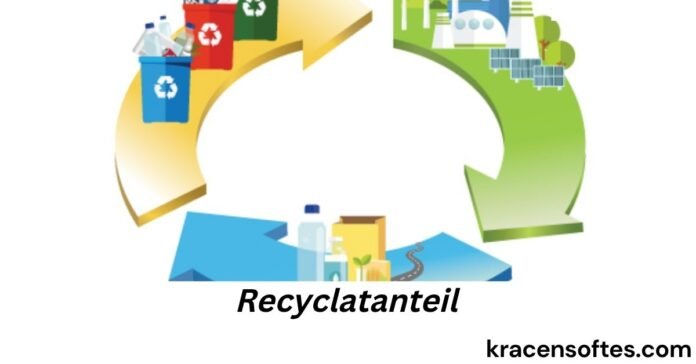
In today’s world, sustainability is no longer just a trend. Consumers and businesses are paying closer attention to where materials come from, how products are made, and what happens to them after use. One term that often appears in discussions about sustainable materials and packaging is “Recyclatanteil.” Understanding this term can make it easier to evaluate recycling claims, compare products, and see how recycled materials fit into the broader circular economy.
What Is Recyclatanteil?
Recyclatanteil is a German sustainability term that means the share or percentage of recycled material contained in a product, material, or package.
In simple English, Recyclatanteil can be translated as “recycled content,” “recycled material share,” or “percentage of recycled material.”
The key idea is simple: Recyclatanteil measures what is already inside a product. It does not measure how much of that product consumers put into a recycling bin after use.
For example, imagine a plastic container that contains 40% recycled plastic and 60% new plastic. Its relevant Recyclatanteil is 40%.
This distinction is important because several recycling terms sound similar but measure different things. A product can contain a high percentage of recycled material while still being difficult to recycle after use. Another product can be highly recyclable but contain little or no recycled material.
In the United States, the closest common term is “recycled content.” The U.S. Environmental Protection Agency explains that a recycled-content product is made with recycled materials collected through recycling programs or recovered from waste during normal manufacturing.
The German word is especially common in discussions about packaging, plastics, manufacturing, construction materials, metals, and the circular economy.
Recyclatanteil Meaning in Simple English
The easiest way to understand Recyclatanteil is:
Recyclatanteil = the percentage of recycled material in a product or material.
The word can be understood as two parts:
- “Recyclat” refers to recycled material or recyclate.
- “Anteil” means share, portion, or percentage.
So, Recyclatanteil describes the share of a product’s material that comes from recycled sources rather than entirely from new, or virgin, raw materials.
For example:
A bottle contains 70 grams of recycled plastic and 30 grams of virgin plastic.
The total relevant plastic content is 100 grams.
The Recyclatanteil is therefore 70%.
This concept is useful because it moves the conversation beyond simply asking whether something can be recycled. It asks another important question:
How much recycled material was actually used to make it?
That is a different question from whether the finished product can be recycled later.
What Is the English Translation of Recyclatanteil?
There is no single English translation that works perfectly in every situation.
The most useful translations are:
- Recycled content
- Recycled content percentage
- Recycled material share
- Percentage of recycled material
- Recycled material content
- Recyclate content
For a U.S. audience, “recycled content” is usually the clearest and most natural term.
For example, instead of saying:
“This package has a high Recyclatanteil.”
A U.S. English version would usually say:
“This package contains a high percentage of recycled content.”
The phrase “recycled content” is also used by U.S. government agencies and environmental organizations. The EPA specifically distinguishes recycled content from recyclability.
Recyclatanteil vs. Recycling Rate
One of the most important points about Recyclatanteil is that it is not the same as a recycling rate.
These terms measure different parts of the material cycle.
Recyclatanteil measures the amount of recycled material used to make a product.
A recycling rate generally measures how much material is collected, recovered, or recycled from a waste stream.
For example, suppose a company makes a new plastic product with 50% recycled plastic.
The product has a 50% recycled content share.
That does not automatically mean that 50% of similar products are recycled after consumers use them.
The two numbers describe different stages.
A useful way to remember the difference is:
- Recyclatanteil asks, “How much recycled material is in the product?”
- Recycling rate asks, “How much material is actually recycled?”
- Recyclability asks, “Can the product be collected and processed into new material?”
The German Initiative Zink makes this distinction clearly. It explains that recycled content describes the share of recycled material in an input product, while an end-of-life recycling rate describes the share returned to the material cycle after the product reaches the end of its useful life.
This distinction prevents a common misunderstanding: a high recycled content percentage is not, by itself, proof that a complete recycling system is working well.
Also Read: Zuhio Keyword Count Checker: Free SEO Keyword Density & Count Tool Guide
Recyclatanteil vs. Recyclability
Recyclatanteil and recyclability are also different.
Recyclatanteil describes the product’s past.
Recyclability describes what may happen to the product in the future.
Consider two plastic containers.
Container A contains 80% recycled plastic but has a complicated design that makes recovery difficult.
Container B contains 10% recycled plastic but has a simple design that is widely accepted by recycling facilities.
Container A has the higher recycled content.
Container B may have better recyclability.
This is why sustainable product design should consider more than one measurement.
A company may need to consider:
- Recycled content
- Recyclability
- Material type
- Product durability
- Collection systems
- Sorting systems
- Processing technology
- Energy use
- Transportation
- Product life span
- End-of-life options
The European packaging policy discussion also treats recycled content and recyclability as separate concepts. A package can contain post-consumer recycled material and still be difficult to recycle, while another package can be recyclable without containing much recycled material.
How Is Recyclatanteil Calculated?
The basic calculation is simple.
Recyclatanteil (%) = recycled material ÷ total relevant material × 100
For example, suppose a product contains:
- 25 pounds of recycled material
- 75 pounds of virgin material
- 100 pounds of total relevant material
The calculation is:
25 ÷ 100 × 100 = 25%
The product therefore has 25% recycled content under this simplified example.
Another example is a plastic package weighing 200 grams.
Suppose 120 grams come from recycled plastic and 80 grams come from virgin plastic.
The calculation is:
120 ÷ 200 × 100 = 60%
The relevant recycled content is 60%.
However, real-world calculations can be more complicated than this simple formula.
A product may contain several different materials. A package might include plastic, paper, aluminum, ink, adhesive, a cap, and a label. A recycled-content statement may apply only to one component.
This is why the reference material must always be identified.
Why the Reference Material Matters
Suppose a bottle is labeled “50% recycled content.”
A consumer may assume that the entire bottle, including its cap, label, adhesive, and other parts, contains 50% recycled material.
That may not be what the statement means.
The 50% could apply only to the bottle body.
This issue is important for both consumers and companies.
The U.S. Federal Trade Commission advises marketers to make clear whether an environmental claim applies to the product, the package, or a particular component. Its guidance also says that claims should accurately communicate the amount of recycled content when a product is only partly made from recycled material.
Therefore, a more useful statement might say:
“The bottle contains 50% post-consumer recycled plastic.”
That statement gives the reader more information than simply saying:
“Made with recycled materials.”
What Are Recyclates?
To understand Recyclatanteil, it helps to understand the word “recyclate.”
A recyclate is material that has been recovered and processed so that it can be used again as a material input.
In plastics, for example, used plastic may be:
- Collected.
- Sorted.
- Cleaned.
- Shredded or ground.
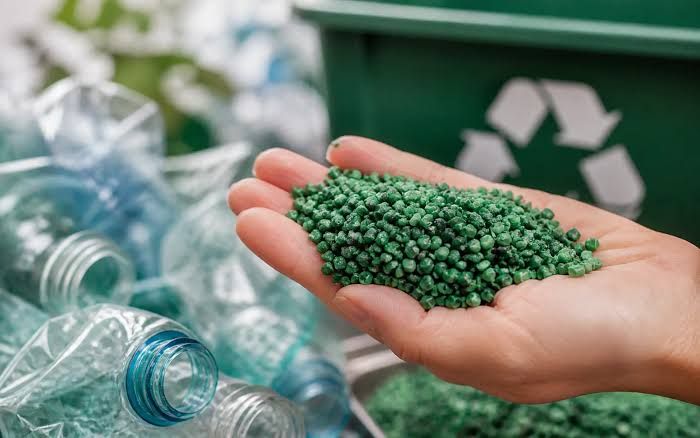
- Processed into flakes or pellets.
- Used to manufacture new products.
The resulting recycled plastic can then become part of a new product.
REWE describes recyclates as recycled materials produced from recovered plastic waste and explains that plastics may be sorted, cleaned, processed into flakes, and then converted into regranulate for new products.
Recyclates can also exist in other material sectors.
Examples include:
- Recycled paper fiber
- Recycled aluminum
- Recycled steel
- Recycled glass
- Recycled PET
- Recycled HDPE
- Recycled polypropylene
- Recycled textiles
- Recycled construction materials
The exact recycling process depends on the material.
Post-Consumer and Pre-Consumer Recycled Content
Not all recycled material comes from the same source.
Two important terms are “post-consumer” and “pre-consumer.”
Post-consumer material comes from products that have already been used by consumers or other end users and then recovered for recycling.
Examples can include:
- Used plastic bottles
- Aluminum cans
- Used cardboard boxes
- Old newspapers
- Consumer packaging
Pre-consumer material is recovered during a manufacturing process before the finished product reaches the consumer.
For example, a manufacturing operation might produce material scraps that would otherwise enter the waste stream. If those materials are recovered and used as recycled input, they may qualify as pre-consumer recycled content under applicable definitions.
The EPA notes that post-consumer content is specifically associated with recyclables collected from consumers or businesses through recycling programs.
The FTC also recognizes the distinction between pre-consumer and post-consumer material in its recycled-content guidance.
For consumers, post-consumer content can be especially meaningful because it shows that material from products already used by people has been brought back into manufacturing.
However, pre-consumer content can also play a useful role in reducing manufacturing waste.
Why Does Recyclatanteil Matter?
Recyclatanteil matters because recycled materials can help keep resources in use instead of immediately relying on new raw materials.
When recycled material replaces some virgin material, manufacturers may reduce demand for additional primary resources.
The benefits can vary by material and production method.
Potential benefits include:
- Reduced demand for virgin raw materials
- Greater use of recovered materials
- Support for recycling markets
- Reduced waste sent to disposal
- More circular material flows
- Potential reductions in environmental impacts
- Greater demand for recycled feedstocks
- Encouragement for better collection and sorting systems
The EPA describes recycling as a way to conserve natural resources, save energy, reduce pollution, and support economic benefits. It also emphasizes the importance of purchasing products made with recycled materials because doing so helps close the recycling loop.
Still, recycled content should not be treated as a magic number.
A product with more recycled material is not automatically better in every environmental category.
The full environmental picture can depend on how the material is collected, transported, processed, manufactured, used, and eventually managed.
Does a Higher Recyclatanteil Always Mean a Greener Product?
No.
This is one of the most important insights when evaluating recycled content.
A higher recycled content percentage can be a positive feature, but it does not tell the entire environmental story.
For example, a product with 80% recycled material may require a complex manufacturing process, long-distance transportation, or frequent replacement.
Another product with 40% recycled material may be extremely durable and remain in use for many years.
The environmental comparison depends on the full life cycle.
Important questions include:
- What material was recycled?
- Where did it come from?
- How was it collected?
- How much processing was required?
- How much virgin material was avoided?
- How long will the product last?
- Can the product be repaired?
- Can it be reused?
- Can it be recycled again?
- What happens at the end of its life?
This is why recycled content should be viewed as one useful sustainability indicator rather than a complete environmental score.
Recyclatanteil in Plastic Packaging
Plastic packaging is one of the most common areas where recycled content is discussed.
Common examples include:
- Beverage bottles
- Food containers
- Shampoo bottles
- Cleaning product bottles
- Storage containers
- Shipping materials
- Plastic films
- Trays
- Industrial packaging
PET, HDPE, PP, and other polymers can be recycled into materials used in new products.
For example, used PET bottles can be collected, sorted, washed, processed, and converted into recycled PET.
A new bottle may then contain some amount of recycled PET.
This creates a material loop.
However, the quality of recycled plastic can vary depending on the input material and processing system.
Color, contamination, additives, previous use, and polymer type can all influence the quality and possible applications of recycled plastic.
This means that increasing Recyclatanteil can require improvements across the entire recycling system, not simply a decision by a manufacturer to add more recycled material.
Also Read: Definitely or Definately: Which Spelling Is Correct?
Recyclatanteil in Paper and Cardboard
The concept is not limited to plastic.
Paper and cardboard products can also contain recycled fibers.
Examples include:
- Shipping boxes
- Paperboard packaging
- Office paper
- Tissue products
- Paper bags
- Printed materials
Recycled paper fibers are recovered from used paper products and processed for use in new paper products.
However, paper fibers cannot normally be recycled forever without quality losses. Fresh fibers may still be needed to maintain material performance.
This demonstrates an important principle:
Recycled content does not necessarily mean that virgin material is completely unnecessary.
Instead, recycling can help reduce dependence on new resources while keeping valuable material in circulation.
Recyclatanteil in Metals
Metals provide another useful example.
Aluminum and steel can be recovered and recycled into new products.
Recycled metal can become part of:
- Beverage cans
- Automotive components
- Construction materials
- Appliances
- Industrial products
- Packaging
Metal recycling can be especially valuable because metals can often be recycled repeatedly while retaining important material properties.
But again, recycled content and recycling rate are not the same.
A product can contain recycled metal, while the overall collection and recovery rate for that material may be different.
The distinction becomes especially important when businesses report sustainability performance.
Recyclatanteil in Construction Materials
Recycled content is also relevant to construction.
Possible applications include:
- Recycled steel
- Recycled aluminum
- Recycled glass
- Recycled concrete aggregates
- Recycled plastics
- Recycled wood products
- Recycled insulation materials
Construction projects use very large quantities of materials, so even a moderate increase in recycled content can represent a substantial amount of material.
At the same time, construction materials must meet performance and safety requirements.
Strength, durability, fire performance, structural requirements, moisture resistance, and building codes can affect whether recycled materials are suitable for a specific application.
This is another reason why recycled content should be evaluated together with product performance.
Recyclatanteil and the Circular Economy
Recyclatanteil is closely connected to the circular economy.
A traditional linear model can be described as:
Take → Make → Use → Dispose
A circular model tries to keep materials and products in use for longer.
It may involve:
- Reduce
- Reuse
- Repair
- Refurbish
- Remanufacture
- Recycle
Recycled content supports the circular economy because it creates demand for materials recovered from previous products.
The basic idea is simple.
If companies buy recycled material to make new products, recycling has a market.
If there is no demand for recovered material, collected waste may have fewer useful destinations.
Therefore, recycled content can help connect the beginning and end of the material cycle.
Consumers also play a role by purchasing products that contain recycled content.
The EPA specifically identifies purchasing recycled-content products as part of closing the recycling loop.
Recyclatanteil and Sustainability Claims
Companies increasingly use environmental claims to communicate product features.
Common claims include:
- Made with recycled content
- Contains recycled material
- Made from recycled plastic
- 50% recycled content
- Post-consumer recycled content
- Recyclable
- Sustainable packaging
- Circular packaging
These statements can be useful, but they should be specific.
A vague phrase such as “eco-friendly” does not tell consumers how much recycled material is actually present.
The FTC warns that broad, unqualified environmental claims can be difficult to substantiate and can create misleading impressions.
A specific statement such as “Made with 40% recycled plastic” gives consumers much more useful information.
Recyclatanteil and Greenwashing
Greenwashing happens when environmental claims make a product appear more environmentally beneficial than the available evidence supports.
Recycled content can become part of a greenwashing problem if companies use vague or exaggerated statements.
For example, imagine a product that contains a small amount of recycled material.
Calling the entire product “made from recycled materials” could give consumers a misleading impression if the percentage is not clear.
The FTC’s guidance says marketers should qualify claims for products or packages made partly from recycled material, such as by stating the percentage of recycled material.
A strong sustainability claim should answer basic questions:
- What is recycled?
- How much is recycled?
- Is the claim about the product or package?
- Is the material pre-consumer or post-consumer?
- Can the claim be documented?
- Is an independent certification involved?
Specific information is generally more trustworthy than broad environmental language.
How Consumers Can Evaluate Recyclatanteil Claims
Consumers do not need to become recycling experts to understand recycled-content claims.
A few simple habits can help.
First, look for a percentage.
“Contains recycled content” gives less information than “Contains 50% recycled plastic.”
Second, check whether the claim refers to the product or the package.
Third, look for information about the source.
A label that says “50% post-consumer recycled material” gives more detail than a general recycled-content statement.
Fourth, do not confuse “recycled” with “recyclable.”
A recycled product contains recycled material.
A recyclable product is designed or accepted for collection and processing into new material.
A product can be one, the other, or both.
The FTC recommends that consumers look for specific environmental information and determine whether a claim applies to the product, packaging, or both.
Why Recyclatanteil Is Important for Manufacturers
Manufacturers are under increasing pressure to understand where their raw materials come from and what happens to products after use.
Recycled content can be part of a broader material strategy.
Companies may use recycled material to:
- Reduce dependence on virgin resources
- Meet customer requirements
- Support circular-economy goals
- Respond to sustainability targets
- Improve packaging performance
- Prepare for regulatory requirements
- Build more resilient material supply chains
However, increasing recycled content can also create technical challenges.
Recycled materials may vary more than virgin materials.
Manufacturers may need better sorting, cleaning, testing, quality control, and traceability.
Some applications also have strict safety or performance requirements.
For example, packaging that comes into contact with food may face additional requirements depending on the material and market.
Therefore, a higher Recyclatanteil can require investment throughout the supply chain.
Recyclatanteil and Product Quality
A common misconception is that recycled material automatically means lower quality.
That is not necessarily true.
Modern recycling systems can produce high-quality recycled materials suitable for demanding applications.
The quality depends on:
- Input material
- Collection method
- Sorting accuracy
- Contamination levels
- Recycling technology
- Processing conditions
- Quality control
- Intended application
For some products, recycled material can perform very similarly to virgin material.
For others, recycled material may require blending with virgin material or additional processing.
The correct question is not simply:
“Is recycled material good or bad?”
A better question is:
“Is this recycled material suitable for this application and produced with appropriate quality controls?”
Recyclatanteil and Product Design
Product design has a major influence on recycled-content opportunities.
Designers can consider:
- Fewer material types
- Easier separation
- Compatible polymers
- Recycled feedstocks
- Reusable components
- Durable structures
- Easier repair
- End-of-life recovery
The goal is not only to put recycled material into a product.
The larger goal is to create products that can participate effectively in material cycles.
For example, a package may be designed with recycled plastic while also being designed so that it can be sorted and processed after use.
This creates a stronger circular design approach.
Recyclatanteil and the Future of Packaging
Packaging is likely to remain one of the most important areas for recycled-content innovation.
Companies are exploring ways to increase recycled material while maintaining:
- Safety
- Strength
- Appearance
- Shelf life
- Barrier performance
- Cost efficiency
- Recyclability
Recent European packaging developments show how these goals can be combined. For example, the German Packaging Institute recognized a flexible stand-up pouch using existing recycled material from household collection while designing the package structure around the properties of that recyclate.
This example highlights an important idea: recycled content does not always require an entirely new waste stream. Existing recycling infrastructure can sometimes provide useful secondary material when product design and material requirements are aligned.
Recyclatanteil in the United States
Although Recyclatanteil is a German term, the underlying concept is highly relevant to the United States.
In American English, businesses, regulators, and consumers generally use the term “recycled content.”
U.S. environmental policy also encourages the use of recycled materials.
The EPA explains that buying products containing recycled content helps close the recycling loop.
The Federal Trade Commission also provides guidance for businesses making recycled-content claims in advertising and product marketing.
Under the FTC framework, it can be deceptive to represent that a product or package contains recycled content unless the material was recovered or diverted from the waste stream during manufacturing or after consumer use.
This makes the concept relevant to American companies even though they may not use the German word Recyclatanteil.
U.S. Rules for Recycled Content Claims
Businesses selling products in the United States should pay attention to environmental marketing claims.
The FTC Green Guides address recycled-content claims and explain that marketers should make claims based on materials that have been recovered or diverted from the waste stream.
Also Read: Occurred or Occured: Which Spelling Is Correct?
The guidance also stresses the importance of clear qualification.
For example, a company should not create the impression that an entire package is made from recycled material when only one component contains recycled content.
This is especially important in online stores.
A claim can appear on:
- Product pages
- Packaging
- Advertisements
- Social media
- Catalogs
- Digital marketing
- Product descriptions
Environmental claims should be accurate regardless of the marketing channel.
Recyclatanteil and Certification
Some companies use third-party certification systems to verify recycled content.
Certification can help provide additional confidence because an independent organization may review material sources, documentation, production systems, and chain-of-custody information.
However, certification systems differ.
Consumers should look at:
- Who operates the certification
- What exactly is being certified
- Whether the percentage is verified
- Whether the claim covers the product or a component
- Whether post-consumer content is distinguished
- What chain-of-custody method is used
A certification logo by itself does not necessarily explain the entire environmental performance of a product.
The FTC also cautions that environmental certifications and seals should clearly communicate their basis so consumers do not incorrectly interpret them as broad claims of overall environmental benefit.
Recyclatanteil and ISO 14021
ISO 14021 is an important international standard in discussions about environmental labels and self-declared environmental claims.
Recycled content is generally understood in terms of the proportion, by mass, of recycled material in a product or packaging.
European regulatory material also uses a definition of recycled content based on the proportion by mass of recycled material and refers to pre-consumer and post-consumer material as defined by ISO 14021.
The importance of standards is that they can make environmental claims more consistent.
Without clear definitions, two companies could use the same phrase while calculating their percentages in very different ways.
Standards help reduce that confusion.
Recyclatanteil and Mass Balance
Another important concept in advanced recycling discussions is mass balance.
Mass-balance systems can be used when recycled or alternative feedstocks are introduced into complex industrial processes where different materials may be mixed.
Instead of physically tracking every molecule from recycled feedstock to the final product, a chain-of-custody system may allocate a verified amount of recycled input to specific products.
This can be technically useful, but it also requires clear accounting rules.
Consumers may find mass-balance claims difficult to understand because the recycled input may not be physically identifiable in the final product.
For this reason, businesses should explain the accounting method clearly when it is important to understanding the claim.
Common Misunderstandings About Recyclatanteil
Several misconceptions appear frequently.
Misunderstanding 1: Recyclatanteil Means Recycling Rate
It does not.
Recyclatanteil describes recycled material in a product.
A recycling rate describes recycling performance within a particular waste or material system.
Misunderstanding 2: 100% Recycled Content Means 100% Recyclable
Not necessarily.
A product can be made entirely from recycled material but still face challenges when consumers try to recycle it again.
Misunderstanding 3: Recycled Means Post-Consumer
Not always.
Recycled content can include qualifying pre-consumer material as well as post-consumer material, depending on the applicable definition and claim.
Misunderstanding 4: More Recycled Content Always Means Better
Not automatically.
Recycled content is important, but environmental performance depends on many factors.
Misunderstanding 5: The Percentage Always Covers the Whole Product
Not necessarily.
A recycled-content percentage may refer to a specific material, component, or package part.
What Does 30% Recyclatanteil Mean?
A 30% Recyclatanteil generally means that 30% of the relevant material mass comes from recycled material.
For a simple 100-pound product made from one material, that could mean:
- 30 pounds recycled material
- 70 pounds virgin material
However, if the product contains several components, the percentage may apply only to one component.
Always check the wording and reference basis.
What Does 50% Recyclatanteil Mean?
A 50% Recyclatanteil means that half of the relevant material, by mass, is recycled material under the applicable calculation method.
It does not automatically mean:
- Half the entire product is recycled
- Half the package is recyclable
- Half of similar products are recycled
- Half of the product will be recycled later
- The product has 50% lower environmental impact
It is specifically a recycled-content measurement.
What Does 100% Recyclatanteil Mean?
A 100% recycled content claim means that the relevant material is entirely made from recycled content under the definition and calculation method being used.
This can be a strong recycled-content achievement.
But it still does not automatically mean that:
- The product is recyclable everywhere
- The product has zero environmental impact
- No energy was used
- No virgin material was used in other components
- The product will be recycled after use
Context remains important.
Recyclatanteil and Consumer Decision-Making
For consumers, recycled content can be one useful factor when comparing similar products.
A practical approach is to compare products across several categories.
Ask:
- Does the product contain recycled content?
- What percentage?
- Is it post-consumer content?
- Does the claim apply to the whole product or only the package?
- Can the product be reused?
- Can it be recycled after use?
- Is the product durable?
- Is there clear information from the manufacturer?
This approach is more reliable than choosing a product simply because its packaging uses words such as “green” or “eco-friendly.”
Specific information is usually more useful than general marketing language.
Why Recyclatanteil Is Becoming More Important
The importance of recycled content is growing because governments, companies, and consumers are paying more attention to resource use and waste.
There is also a practical economic reason.
Recycling only works as a material system when recovered materials have a destination.
If manufacturers use recycled material, they create demand for those materials.
That demand can encourage investment in:
- Collection
- Sorting
- Processing
- Recycling facilities
- Material quality
- Supply-chain tracking
- Product design
This creates a feedback loop.
More demand for recycled material can support recycling markets.
Better recycling systems can provide more recycled material.
More reliable recycled material can make it easier for manufacturers to use it.
Also Read: Minecraft PlayBattleSquare: Everything Players Need to Know
The Limits of Recyclatanteil as a Sustainability Metric
Recyclatanteil is useful, but it should not be used alone.
A sustainability assessment may also need to consider:
- Product lifetime
- Material efficiency
- Energy use
- Water use
- Transportation
- Manufacturing emissions
- Toxicity
- Reuse potential
- Repairability
- Recyclability
- Waste generation
- End-of-life management
This is particularly important for purchasing decisions.
A company should not assume that increasing recycled content automatically solves every environmental problem.
Instead, recycled content should be treated as one part of a broader circular-economy strategy.
Frequently Asked Questions About Recyclatanteil
1. Is Recyclatanteil the same as recycled content?
Yes, in most sustainability and material discussions, Recyclatanteil refers to the share of recycled material in a product or material. For a U.S. audience, “recycled content” is the more common English expression.
The exact calculation can depend on the product, material, standard, and claim being used.
2. Can Recyclatanteil be higher than the recycling rate?
Yes.
The two measurements describe different things.
A company could use a large amount of recycled material purchased from an established recycling market even if the recycling rate of its own products is different.
A high recycled content figure does not establish a particular end-of-life recycling rate.
3. Does recycled content reduce the need for virgin materials?
It can.
When recycled material replaces virgin material in a product, less new raw material may be needed for that product.
The actual environmental benefit depends on the material, recycling process, energy requirements, transportation, product design, and other life-cycle factors.
4. Why might a manufacturer use only part recycled and part virgin material?
Manufacturers may blend recycled and virgin material to achieve the required performance, quality, consistency, appearance, safety, or technical specifications.
The correct balance depends on the application.
Some products can use very high recycled-content levels, while others may require a certain amount of virgin material.
5. Can recycled material be recycled again?
Often, yes, but not always indefinitely or without losses.
The ability to recycle material again depends on the material type, contamination, additives, processing method, product design, and available recycling technology.
Some materials can circulate through recycling systems many times, while others experience quality loss or require additional virgin input.
Conclusion
Recyclatanteil is a useful term for understanding how much recycled material is actually contained in a product.
In simple English, it means recycled content or the percentage of recycled material.
The most important point is that Recyclatanteil measures what goes into a product, not what happens to that product after it is used.
A product with 50% recycled content contains 50% recycled material in the relevant material or component under the applicable calculation method. That does not automatically mean the product is 50% recyclable or that 50% of similar products are successfully recycled.
Recyclatanteil should also be separated from recycling rate and recyclability.
For U.S. consumers and businesses, “recycled content” is the more familiar English term. The EPA recognizes recycled-content products and explains the difference between recycled content and recyclability.
The FTC also emphasizes that recycled-content marketing claims should be truthful, specific, and properly qualified. Claims should make clear what contains recycled material and, when appropriate, how much.
The larger value of Recyclatanteil is its connection to the circular economy. Using recovered materials can create demand for recycling and help keep resources in productive use.
However, recycled content is not a complete measure of environmental performance.
The best way to evaluate a product is to look at the whole picture: how it is made, how long it lasts, how much material it uses, whether it can be reused or repaired, whether it can be recycled, and what happens at the end of its useful life.
In short, Recyclatanteil answers a simple but important question:
“How much recycled material is actually in this product?”
That question helps move sustainability discussions from vague promises toward measurable material information. For consumers, manufacturers, and policymakers, that makes recycled content a valuable part of understanding how modern products can support a more circular and resource-efficient economy.