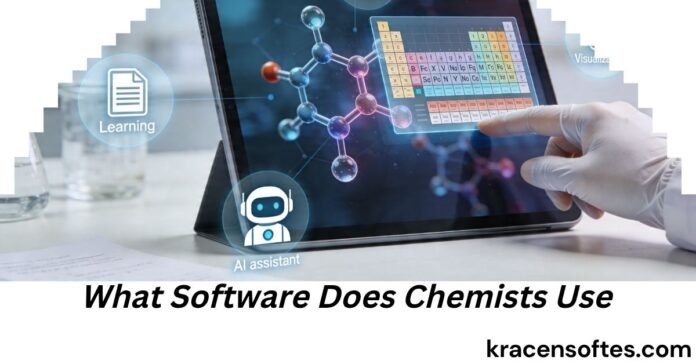
Chemistry has changed dramatically over the past few decades. Modern laboratories no longer rely only on notebooks, calculators, and manual experiments. Today, chemists use powerful software to design molecules, analyze laboratory data, simulate chemical reactions, manage research projects, and collaborate with teams worldwide.
If you’ve ever wondered, what software does chemists use, the answer depends on the type of work they perform. Academic researchers, pharmaceutical scientists, industrial chemists, environmental specialists, forensic experts, and quality control professionals all use different software tools designed for their specific needs.
The latest chemistry software helps scientists work faster, reduce errors, improve accuracy, and make better decisions using advanced analytics, artificial intelligence (AI), and cloud computing. These digital tools are transforming chemical research, manufacturing, education, and healthcare.
This comprehensive guide explains everything you need to know about what software does chemists use, including the most popular applications, their features, benefits, and how they improve scientific work.
What Software Does Chemists Use?
The simple answer is that chemists use many different types of software depending on their job. There isn’t one universal program that does everything.
A modern chemist may use several software applications during a single project, including:
- Chemical drawing software
- Laboratory Information Management Systems (LIMS)
- Electronic Laboratory Notebooks (ELN)
- Molecular modeling software
- Computational chemistry software
- Spectroscopy analysis software
- Chromatography data systems
- Statistical analysis software
- Scientific graphing tools
- Artificial intelligence platforms
- Scientific database software
- Laboratory automation software
Each program solves a different problem. Some help chemists visualize molecules, while others organize laboratory data, control scientific instruments, or predict chemical reactions before they happen.
As laboratories become more digital, integrated software platforms are becoming the standard across universities, pharmaceutical companies, chemical manufacturers, and government research laboratories.
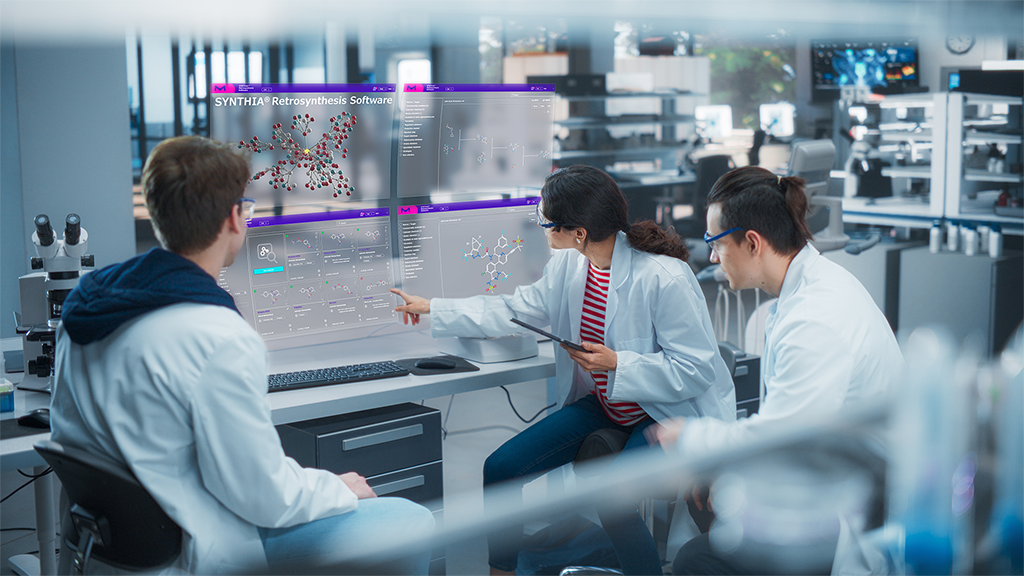
Why Modern Chemists Depend on Software
Chemistry is becoming increasingly data-driven. Every experiment generates valuable information that must be analyzed, stored, and interpreted correctly.
Without specialized software, researchers would spend far more time performing calculations and organizing results manually.
Today’s chemistry software helps by:
- Reducing human errors
- Increasing research accuracy
- Saving laboratory time
- Managing thousands of chemical compounds
- Improving collaboration between research teams
- Meeting regulatory requirements
- Automating repetitive tasks
- Producing high-quality scientific reports
- Supporting data-driven discoveries
For example, pharmaceutical researchers often evaluate millions of chemical compounds before identifying a promising drug candidate. Advanced software makes this process possible within a reasonable timeframe.
Also read: What Is SaaS Software? Complete Beginner’s Guide to Software as a Service
Main Categories of Chemistry Software
When discussing what software does chemists use, it helps to group applications into several major categories.
The most common categories include:
Laboratory Management Software
Used for organizing samples, tracking experiments, managing inventories, and maintaining laboratory records.
Chemical Structure Software
Allows scientists to draw, edit, and share chemical structures using internationally recognized chemical notation.
Analytical Instrument Software
Processes data generated by laboratory instruments such as mass spectrometers, infrared spectrometers, and chromatographs.
Computational Chemistry Software
Uses mathematical models to predict molecular behavior without performing physical experiments.
Data Analysis Software
Analyzes experimental results using statistical methods and visualization tools.
Artificial Intelligence Software
Uses machine learning algorithms to discover patterns and predict chemical properties.
Each category serves an important role in modern chemical research.
Laboratory Information Management Systems (LIMS)
One of the most important answers to what software does chemists use is Laboratory Information Management Systems, commonly called LIMS.
LIMS software manages laboratory operations from beginning to end.
It tracks:
- Samples
- Test results
- Laboratory workflows
- Equipment
- Personnel
- Quality control
- Regulatory compliance
- Reports
Instead of searching through paper files, chemists can instantly locate sample histories, testing records, and experimental data.
Benefits of LIMS
A well-designed LIMS improves laboratory efficiency by:
- Automating sample tracking
- Reducing paperwork
- Improving data accuracy
- Supporting regulatory compliance
- Increasing productivity
- Preventing data loss
Large pharmaceutical companies and diagnostic laboratories rely heavily on LIMS every day.
Electronic Laboratory Notebooks (ELN)
Traditional laboratory notebooks are gradually being replaced by Electronic Laboratory Notebooks.
An ELN stores research digitally, making experiments easier to organize, search, and share.
Instead of handwriting observations, chemists record:
- Experimental procedures
- Chemical reactions
- Instrument outputs
- Images
- Graphs
- Raw data
- Calculations
Everything remains securely stored and searchable.
Advantages of Electronic Laboratory Notebooks
Electronic notebooks offer several important improvements over paper notebooks.
They provide:
- Automatic backups
- Cloud synchronization
- Version history
- Collaboration tools
- Faster searching
- Better organization
- Secure data storage
Many universities now encourage students to learn ELN systems before entering professional laboratories.
Chemical Structure Drawing Software
Drawing chemical structures accurately is essential for research papers, patents, laboratory reports, and scientific communication.
Chemical drawing software allows scientists to create professional molecular diagrams in minutes.
These applications support:
- Organic chemistry
- Inorganic chemistry
- Polymer chemistry
- Biochemistry
- Medicinal chemistry
Common features include:
- Two-dimensional molecular structures
- Reaction mechanisms
- Structural formulas
- Chemical naming
- Molecular property calculations
- File export for publications
Researchers use these diagrams when presenting discoveries or collaborating with colleagues.
Why Chemical Drawing Software Is Essential
Drawing molecules by hand takes time and increases the chance of mistakes.
Modern software automatically checks:
- Chemical valence
- Bond angles
- Molecular formulas
- Atom numbering
- Structural consistency
These automatic checks improve scientific accuracy while saving valuable research time.
Molecular Modeling Software
Molecular modeling software allows chemists to build three-dimensional molecular models.
Instead of imagining molecular shapes, scientists can rotate, measure, and analyze them on screen.
These programs help researchers understand:
- Molecular geometry
- Bond lengths
- Electron distribution
- Molecular interactions
- Protein binding
- Drug design
Visualization often reveals relationships that are difficult to recognize using traditional chemical formulas.
Applications of Molecular Modeling
Researchers use molecular modeling for:
- Drug discovery
- Material science
- Nanotechnology
- Protein chemistry
- Enzyme research
- Catalyst development
Modern visualization tools create realistic 3D models that closely represent molecular behavior.
Computational Chemistry Software
One of the fastest-growing fields answering what software does chemists use is computational chemistry.
Instead of performing every experiment in the laboratory, researchers now simulate chemical reactions using high-performance computers.
Computational chemistry software predicts:
- Reaction pathways
- Molecular stability
- Electronic structures
- Thermodynamic properties
- Reaction energy
- Chemical kinetics
This reduces research costs while speeding scientific discovery.
Why Computational Chemistry Is Growing
Physical laboratory experiments often require:
- Expensive chemicals
- Specialized equipment
- Long preparation times
- Safety precautions
Computer simulations allow scientists to evaluate many possibilities before beginning laboratory testing.
This approach saves both time and money.
Spectroscopy Software
Spectroscopy instruments generate enormous amounts of data.
Interpreting that information manually would be extremely difficult.
Spectroscopy software processes results from techniques such as:
- Infrared spectroscopy (IR)
- UV-Visible spectroscopy
- Nuclear Magnetic Resonance (NMR)
- Raman spectroscopy
- Fluorescence spectroscopy
These applications automatically identify important peaks, compare reference libraries, and generate professional reports.
How Spectroscopy Software Helps Chemists
The software can quickly:
- Identify unknown compounds
- Measure concentration
- Compare samples
- Detect impurities
- Monitor reactions
- Improve analytical accuracy
Automation significantly reduces interpretation time.
Chromatography Data Systems (CDS)
Chromatography is widely used to separate chemical mixtures.
The instruments generate complex chromatograms that require specialized software for analysis.
Also Read: What Is the SPSS Software? A Complete Beginner’s Guide to Features, Uses, Benefits, and Applications
Chromatography Data Systems manage:
- Instrument control
- Sample queues
- Peak integration
- Compound identification
- Quantitative analysis
- Report generation
Industries that commonly use chromatography software include:
- Pharmaceuticals
- Food safety
- Environmental testing
- Petrochemicals
- Cosmetics
- Clinical laboratories
Statistical Analysis Software
Scientific experiments produce large datasets.
Chemists use statistical software to determine whether observed results are meaningful or occurred by chance.
These programs help calculate:
- Standard deviation
- Regression analysis
- Analysis of variance (ANOVA)
- Confidence intervals
- Correlation
- Predictive models
Good statistical analysis improves confidence in research findings.
Scientific Graphing and Data Visualization
Numbers alone rarely tell the complete story.
Visualization software transforms laboratory data into:
- Line graphs
- Scatter plots
- Histograms
- Heat maps
- Three-dimensional charts
- Publication-quality figures
These visualizations help researchers identify patterns that may not be obvious in raw data.
High-quality graphs are also essential for scientific journals, conferences, and presentations.
Artificial Intelligence Is Changing Chemistry Software
Artificial intelligence has become one of the biggest innovations in chemistry.
Instead of simply analyzing existing data, AI can recognize hidden patterns and generate predictions.
Modern AI-powered chemistry software assists with:
- Drug discovery
- Molecule generation
- Reaction prediction
- Material design
- Laboratory automation
- Property prediction
- Experimental optimization
Researchers can now evaluate thousands—or even millions—of possible compounds far faster than traditional methods allow.
Machine learning models continue to improve as more experimental data becomes available.
Cloud-Based Chemistry Software
Cloud technology has transformed the way chemists collaborate.
Instead of storing files on a single laboratory computer, cloud platforms allow secure access from anywhere.
Benefits include:
- Real-time collaboration
- Automatic backups
- Easy sharing
- Remote access
- Better security
- Simplified software updates
Global research teams can work together without being in the same laboratory, accelerating scientific progress.
How Modern Chemistry Software Works Together
One of the most important trends is software integration.
Rather than using isolated programs, laboratories increasingly connect multiple systems into a single digital workflow.
For example:
- A chemist designs a molecule using chemical drawing software.
- The structure is tested using molecular modeling software.
- Experimental data is stored in an Electronic Laboratory Notebook.
- Samples are tracked through a Laboratory Information Management System.
- Instrument data is analyzed using spectroscopy and chromatography software.
- Statistical software validates the results.
- AI tools suggest improvements for future experiments.
This connected approach improves efficiency, reduces duplicate work, and creates a complete digital record of every research project.
Most Popular Chemistry Software Used by Chemists
After understanding the different categories of chemistry software, the next question is which programs are actually used in laboratories. The answer depends on the industry, research goals, and available budget.
Below are some of the most widely used software solutions in modern chemistry.
ChemDraw
ChemDraw is one of the world’s most recognized chemical drawing programs. It helps chemists create professional-quality chemical structures, reaction mechanisms, and molecular diagrams.
Common uses include:
- Drawing organic molecules
- Creating reaction pathways
- Preparing research papers
- Writing patents
- Teaching chemistry
- Publishing scientific journals
Its user-friendly interface makes it suitable for both beginners and experienced researchers.
ChemOffice
ChemOffice combines several chemistry tools into one package. It includes molecular drawing, data analysis, and structure visualization.
Researchers often use it when managing larger scientific projects because it connects multiple chemistry functions in one environment.
Gaussian
Gaussian is one of the leading computational chemistry programs.
It predicts molecular behavior using advanced quantum chemistry calculations.
Scientists use Gaussian for:
- Electronic structure analysis
- Molecular optimization
- Reaction prediction
- Energy calculations
- Spectroscopy simulations
Although it has a learning curve, it remains one of the most respected tools in theoretical chemistry.
Avogadro
Avogadro is a free molecular editor that allows chemists to build and visualize molecules in three dimensions.
Many students begin learning computational chemistry with Avogadro because it is simple to use while still offering powerful visualization tools.
MestReNova
Nuclear Magnetic Resonance (NMR) plays a major role in identifying chemical compounds.
MestReNova helps chemists process:
- NMR spectra
- Mass spectrometry data
- Infrared spectroscopy
- Raman spectroscopy
Its automated processing tools save researchers many hours of manual analysis.
OriginPro
OriginPro specializes in scientific graphing and statistical analysis.
Researchers frequently use it to create publication-quality figures for journals and conference presentations.
It supports:
- Statistical testing
- Curve fitting
- Peak analysis
- Data visualization
- Scientific reporting
MATLAB
Although MATLAB is not designed only for chemistry, many chemists use it for advanced calculations and custom scientific programming.
Applications include:
- Data processing
- Mathematical modeling
- Instrument automation
- Artificial intelligence research
- Machine learning
Its flexibility makes it valuable in many research laboratories.
What Software Does Chemists Use in Different Industries?
Different industries require different software because each field has unique goals and regulations.
Pharmaceutical Industry
Drug discovery is one of the most software-intensive areas of chemistry.
Pharmaceutical chemists use software for:
- Drug design
- Molecular docking
- Clinical data analysis
- Compound databases
- Regulatory documentation
- Quality assurance
Artificial intelligence has become especially important because it helps researchers identify promising drug candidates much faster than traditional screening methods.
Chemical Manufacturing
Industrial chemists focus on producing chemicals safely, efficiently, and consistently.
Their software often manages:
- Production processes
- Equipment monitoring
- Quality control
- Inventory management
- Safety compliance
- Environmental reporting
Automation software is becoming increasingly common in manufacturing plants.
Environmental Chemistry
Environmental laboratories analyze water, soil, and air samples.
Software helps chemists:
- Detect pollutants
- Analyze contaminants
- Monitor environmental changes
- Generate compliance reports
- Track laboratory samples
Fast and accurate data processing is essential because environmental testing often involves thousands of samples.
Food Chemistry
Food laboratories ensure products meet safety and quality standards.
Software supports:
- Nutritional analysis
- Contaminant detection
- Ingredient verification
- Shelf-life studies
- Quality assurance
Laboratory automation has significantly improved testing speed within the food industry.
Forensic Chemistry
Forensic chemists analyze evidence collected during criminal investigations.
Their software helps identify:
- Drugs
- Unknown powders
- Toxic substances
- Explosive residues
- Biological evidence
Maintaining accurate digital records is especially important because laboratory findings may be presented in court.
What Software Do Chemistry Students Use?
Students usually begin with easier programs before learning advanced research software.
Common educational software includes:
- Molecular visualization tools
- Chemical equation software
- Interactive periodic tables
- Virtual laboratory simulations
- Structure drawing programs
- Scientific calculators
- Graphing software
These tools help students better understand chemical concepts while preparing them for professional laboratory work.
Cloud-Based Chemistry Platforms Are Becoming the Standard
Many laboratories are replacing locally installed software with cloud-based platforms.
Cloud software offers several advantages.
Better Collaboration
Scientists working in different locations can access the same research data.
Automatic Updates
Users always have access to the latest features without manually installing updates.
Improved Data Security
Professional cloud providers invest heavily in cybersecurity and encrypted storage.
Easier Remote Access
Researchers can review experiments from home, conferences, or other laboratories.
Cloud technology also simplifies collaboration between universities and industry partners.
How Artificial Intelligence Is Transforming Chemistry
Artificial intelligence is changing how chemists perform research.
Instead of replacing scientists, AI acts as a powerful assistant.
Modern AI systems can:
- Predict reaction outcomes
- Design new molecules
- Recommend experimental conditions
- Analyze scientific literature
- Identify hidden data patterns
- Optimize laboratory workflows
One exciting development is generative AI for chemistry.
These systems can suggest completely new molecular structures that may never have been considered by human researchers.
This capability is especially valuable in drug discovery and advanced materials research.
Benefits of Using Chemistry Software
The growing popularity of chemistry software is driven by the many advantages it offers.
Some of the biggest benefits include:
Increased Accuracy
Software reduces calculation mistakes and improves consistency across experiments.
Faster Research
Automated workflows save hours of repetitive work.
Better Data Organization
Digital records are easier to search and manage than paper notebooks.
Improved Collaboration
Researchers can share experiments instantly with colleagues around the world.
Regulatory Compliance
Many industries must follow strict regulations.
Software helps laboratories maintain complete, accurate documentation for inspections and audits.
Cost Savings
Although advanced software requires an initial investment, automation often reduces long-term operating costs.
Challenges Chemists Face When Using Software
Despite its advantages, chemistry software also presents some challenges.
Learning Curve
Advanced scientific programs may require specialized training.
High Licensing Costs
Professional software packages can be expensive, especially for smaller laboratories.
Compatibility Issues
Different software programs may not always work well together.
Data Security
Research data must be protected from unauthorized access.
Regular Updates
Keeping software current is necessary for security, compatibility, and new features.
Successful laboratories address these challenges by investing in training, secure IT systems, and software integration.
How to Choose the Right Chemistry Software
If you’re wondering what software does chemists use for a specific project, consider the following factors before choosing a solution.
Identify Your Goals
Determine whether you need software for:
- Chemical drawing
- Data analysis
- Laboratory management
- Molecular modeling
- Artificial intelligence
- Instrument control
Consider Ease of Use
Simple software often improves productivity because researchers spend less time learning the system.
Check Compatibility
Ensure the software works with existing laboratory instruments and file formats.
Evaluate Support
Reliable technical support and regular updates are important for long-term success.
Think About Future Growth
Choose software that can expand as your laboratory grows.
Scalable platforms reduce the need for costly replacements later.
Future Trends in Chemistry Software
Chemistry software continues to evolve rapidly.
Several trends are expected to shape the future of scientific research.
Artificial Intelligence Everywhere
AI will become integrated into nearly every chemistry platform.
Greater Laboratory Automation
Robotic systems will perform more repetitive laboratory tasks.
Digital Twins
Researchers will create virtual laboratory models to simulate experiments before performing them physically.
Better Integration
Future software platforms will connect instruments, databases, AI systems, and laboratory management tools into one seamless ecosystem.
Quantum Computing
Although still developing, quantum computing may eventually solve chemical calculations that are impossible for today’s computers.
These technologies could dramatically accelerate scientific discovery over the next decade.
Expert Insights on Chemistry Software
Based on current industry trends, successful chemists share several common habits when using software.
- They learn multiple software platforms instead of relying on only one.
- They keep digital laboratory records organized from the beginning.
- They regularly back up important research data.
- They validate software-generated results with scientific knowledge rather than accepting every output automatically.
- They continue learning as new technologies emerge.
The best chemists combine technical expertise with strong scientific reasoning.
Software is a tool that supports good science—it does not replace critical thinking.
Common Mistakes to Avoid
Many researchers make avoidable mistakes when adopting new software.
Common examples include:
- Choosing software based only on price
- Ignoring staff training
- Failing to back up research data
- Using outdated software versions
- Overlooking cybersecurity
- Not validating automated calculations
- Purchasing software with unnecessary features
Avoiding these mistakes helps laboratories maximize productivity and reduce long-term costs.
Conclusion
The answer to what software does chemists use is more diverse than ever before. Modern chemists rely on a wide range of digital tools to design molecules, manage laboratory operations, analyze scientific data, simulate chemical reactions, and collaborate with research teams around the world.
From chemical drawing software and Laboratory Information Management Systems to computational chemistry platforms, spectroscopy analysis tools, chromatography data systems, and AI-powered research assistants, software has become an essential part of every stage of scientific work.
As chemistry continues to evolve, software will play an even greater role in accelerating discoveries, improving laboratory efficiency, and solving complex global challenges in medicine, energy, environmental protection, and materials science.
Whether you are a student beginning your chemistry journey or an experienced researcher leading advanced projects, understanding what software does chemists use will help you stay prepared for the increasingly digital future of chemistry.
Frequently Asked Questions
Can chemistry software replace laboratory experiments?
No. Software can simulate many chemical processes and predict outcomes, but laboratory experiments are still necessary to verify results and confirm scientific accuracy.
Do beginner chemists need expensive software?
Not always. Many universities and organizations provide free or educational versions of chemistry software that are suitable for learning and academic projects.
Is coding required to use chemistry software?
Most chemistry software includes graphical interfaces that do not require programming. However, learning basic coding can help automate tasks and analyze larger datasets.
Can chemistry software work with laboratory instruments?
Yes. Many programs connect directly with analytical instruments such as spectrometers, chromatographs, and balances to collect and process data automatically.
Is chemistry software useful outside research laboratories?
Absolutely. It is widely used in manufacturing, healthcare, environmental testing, food production, education, cosmetics, agriculture, and forensic science.
How often should chemistry software be updated?
Regular updates are recommended because they improve security, fix bugs, add new features, and ensure compatibility with modern operating systems and laboratory equipment.
Can chemistry software help reduce laboratory costs?
Yes. Automation, improved data management, and predictive modeling can reduce wasted materials, shorten research timelines, and improve overall efficiency.
What skills should chemists learn alongside chemistry software?
Data analysis, scientific writing, statistics, laboratory safety, and basic programming are valuable skills that complement modern chemistry software and improve career opportunities.
Is cloud-based chemistry software safe for sensitive research?
Most reputable providers use advanced encryption, access controls, and regular security updates. Laboratories should still follow internal cybersecurity policies and regulatory requirements.
Will artificial intelligence replace chemists in the future?
No. AI can automate repetitive tasks and provide valuable predictions, but human creativity, scientific judgment, experimental design, and ethical decision-making remain essential to chemistry.