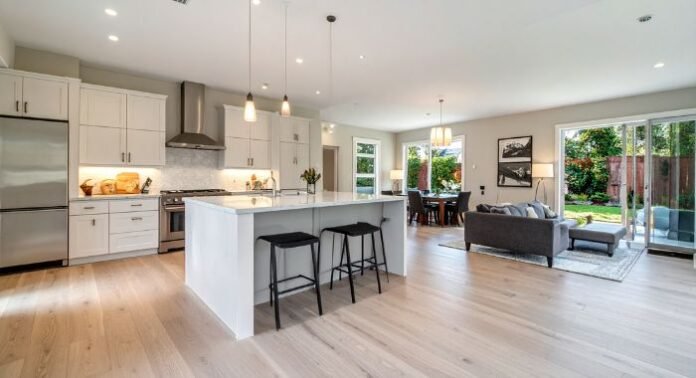
Wood flooring includes different construction types, finishes, surface textures, and wood species. Installation conditions influence long-term performance, and they shape maintenance and cleaning requirements throughout ownership. Grain pattern, hardness, and visual character vary across wood types, creating different maintenance expectations. Here are some ways to maintain and clean wood flooring:
Understand Hardwood Features
Hardwood flooring includes different constructions, species, finishes, textures, and plank designs. Comparing these characteristics reveals differences in appearance and maintenance expectations before installation. Solid hardwood uses one piece of natural wood throughout each plank. Engineered hardwood combines a real hardwood surface with a layered core.
That layered construction increases stability when environmental conditions change. Engineered hardwood is also ideal to install over concrete slabs, and it supports many remodeling projects. Floor-height transitions influence installation planning, so construction type affects where each flooring option fits.
Wood species create distinct visual characteristics across hardwood flooring. Maple features a finer grain pattern, hickory displays greater natural variation, and walnut presents a darker color. Comparing wood types helps homeowners align routine cleaning with the selected hardwood floor’s natural characteristics and long-term care requirements.
Protect the Floor Finish
Floor finishes define the visible surface of wood flooring and influence its finished appearance. Large showroom samples make grain, finish, and color variation easier to evaluate before selection. This allows you to match your floor with your visual style and theme. Smooth finishes present natural grain patterns and color variation with minimal surface texture. Their uniform appearance makes surface marks and accumulated dust easier to notice under changing lighting conditions.
Wire-brushed finishes feature a subtle texture that creates greater visual variation across each plank. Textured finishes soften the appearance of everyday wear, making them suitable for households with children or pets. Routine removal of loose debris reduces surface abrasion, and cleaning practices that match the existing finish maintain a consistent appearance across the floor.
Create a Maintenance Routine
Routine maintenance changes according to everyday living patterns and the way each home is used. Entryways, hallways, and connected living spaces often collect loose debris before other areas, so they deserve closer attention during routine cleaning. As seasonal conditions change, dust and tracked-in particles accumulate in different locations throughout the home. Regularly checking those areas identifies changing debris patterns, and those observations help refine routine cleaning over time.
Remove Dirt and Debris
Dust, soil, sand, and other loose particles accumulate on wood flooring during everyday use. As people move across the floor, those particles move with foot traffic, and repeated movement creates continued contact with the surface. Entryways often collect higher amounts of tracked-in debris because footwear and pet paws carry material indoors.
Regular debris removal keeps loose particles from remaining on the floor between cleaning sessions. Dry cleaning methods remove surface debris before moisture enters the cleaning process. Soft-bristle brooms, microfiber dust mops, and vacuum cleaners designed for hard floors collect loose particles without leaving residue behind.
Explore Wood Flooring Options
Maintaining wood flooring requires selecting flooring with construction, species, finish, and texture suited to the environment where it is installed. Professional flooring guidance helps connect maintenance requirements with household activity and installation conditions, while accounting for the flooring’s characteristics. It also helps establish realistic expectations for how the flooring looks and performs throughout everyday use. Visit a showroom to compare finishes and discuss maintenance requirements with flooring professionals.