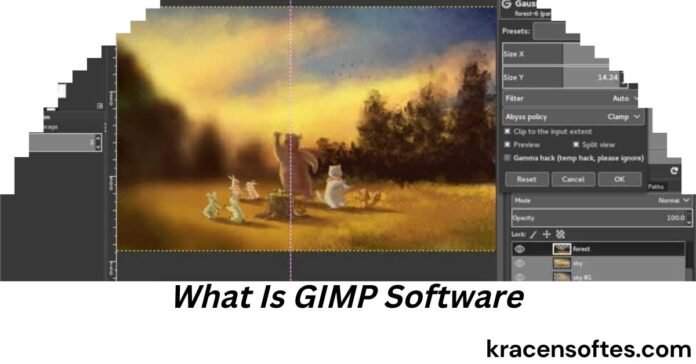
If you have ever searched for a free image editing program, chances are you have come across GIMP. Many people wonder, “what is GIMP software” and whether it is good enough to replace expensive photo editing programs. The answer depends on your needs, but for millions of users worldwide, GIMP has become one of the best free image editing tools available.
Whether you are a student, blogger, photographer, graphic designer, marketer, or small business owner, understanding what is GIMP software can help you save money while creating professional-quality images. Unlike many premium applications that require monthly subscriptions, GIMP offers powerful editing tools completely free.
In recent years, GIMP has continued to improve with better performance, modern interface updates, enhanced file support, and new editing capabilities. It has grown from a simple open-source project into a professional image manipulation program trusted by creative professionals around the world.
This guide explains everything you need to know about what is GIMP software, including its history, features, benefits, limitations, real-world uses, and whether it is the right choice for your projects.
What Is GIMP Software?
The simplest answer to “what is GIMP software” is that GIMP is a free and open-source image editing program designed for photo editing, graphic design, digital painting, image manipulation, and creative artwork.
GIMP stands for GNU Image Manipulation Program. It was created as an alternative to expensive commercial image editing software while giving users complete freedom to customize and improve the program.
Unlike many free editors that offer only basic editing tools, GIMP includes advanced features such as:
- Layer-based editing
- Professional color correction
- Photo retouching
- Brush customization
- Selection tools
- Text editing
- Filters and effects
- Plugin support
- Digital painting tools
- File format compatibility
Because it is open-source software, thousands of developers from around the world continue improving GIMP every year.
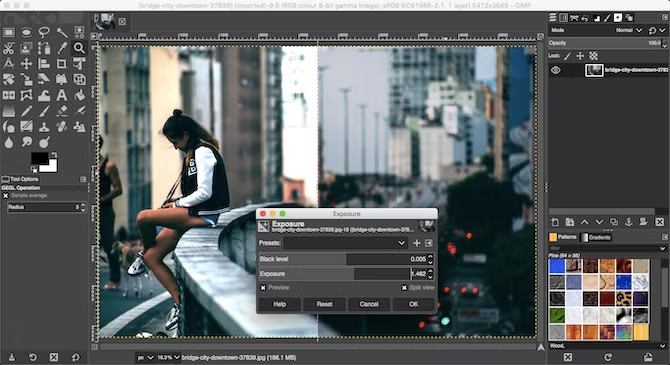
What Does GIMP Software Do?
Understanding what is GIMP software becomes easier when you know what it can actually accomplish.
GIMP allows users to edit, enhance, create, and manipulate digital images from start to finish.
Common tasks include:
- Removing backgrounds
- Editing portraits
- Designing logos
- Creating social media graphics
- Making YouTube thumbnails
- Designing website graphics
- Restoring old photographs
- Drawing digital artwork
- Creating marketing materials
- Editing screenshots
- Creating illustrations
- Preparing images for printing
Whether you want to make a simple crop or create detailed digital artwork, GIMP provides tools for nearly every stage of image editing.
The History of GIMP Software
To fully understand what is GIMP software, it helps to know where it came from.
ALso Read: What Is Framework in Software? A Complete Beginner’s Guide to Software Frameworks
GIMP began in 1995 as a university project developed by Spencer Kimball and Peter Mattis at the University of California, Berkeley.
Their goal was simple:
Create a powerful image editor that anyone could use without paying expensive licensing fees.
Over time, developers worldwide joined the project. Since GIMP is open source, anyone with programming skills can contribute improvements.
Major improvements over the years include:
- Faster editing engine
- Better layer management
- High-resolution display support
- Improved color management
- Enhanced plugin ecosystem
- Modern interface updates
- Better file compatibility
- Performance optimization
Today, GIMP continues to receive regular updates from an active development community.
Why Is GIMP So Popular?
Many people searching what is GIMP software are surprised that millions of users choose it over paid software.
Several reasons explain its popularity.
Completely Free
Perhaps the biggest advantage is cost.
There are:
- No subscriptions
- No trial period
- No hidden payments
- No premium upgrade
Anyone can download and use GIMP without paying.
Open Source
Unlike proprietary software, GIMP’s source code is publicly available.
This creates several benefits:
- Faster bug fixes
- Community improvements
- Greater transparency
- Better customization
- Long-term availability
Works on Multiple Operating Systems
GIMP supports multiple platforms including:
- Windows
- macOS
- Linux
This flexibility makes it useful for schools, businesses, and home users.
Professional Editing Tools
Although free, GIMP includes many tools commonly found in expensive editing software.
These include:
- Layers
- Masks
- Blend modes
- Advanced brushes
- Color correction
- Clone tools
- Healing tools
- Transform tools
- Smart selections
Key Features of GIMP Software
Understanding the major features helps explain what is GIMP software and why professionals continue using it.
Layer Editing
Layers allow users to work on different parts of an image independently.
Instead of permanently changing an image, layers let you:
- Edit safely
- Move objects
- Add effects
- Change backgrounds
- Organize projects
Layers are one of the most important tools in professional image editing.
Advanced Selection Tools
GIMP offers several selection methods including:
- Rectangle Select
- Ellipse Select
- Free Select
- Foreground Select
- Fuzzy Select
- Color Select
- Intelligent Scissors
These tools help isolate specific objects for editing.
Photo Retouching
Photo editing is one of GIMP’s strongest capabilities.
Users can:
- Remove blemishes
- Whiten teeth
- Improve skin tones
- Remove unwanted objects
- Correct exposure
- Fix red-eye
- Enhance portraits
Many photographers use GIMP to prepare images before publishing.
Digital Painting
Artists can create original artwork using:
- Pressure-sensitive tablets
- Custom brushes
- Pencil tools
- Airbrush tools
- Ink tools
- Smudge brushes
Thousands of downloadable brushes expand GIMP’s creative possibilities.
Text Editing
Designers can create:
- Posters
- Advertisements
- Social media graphics
- Flyers
- Banners
- Business cards
Text layers remain editable throughout the design process.
Filters and Effects
GIMP includes hundreds of creative filters.
Examples include:
- Blur
- Sharpen
- Lighting effects
- Artistic effects
- Distortion
- Noise reduction
- Drop shadows
- Vintage looks
These effects help transform ordinary images into eye-catching graphics.
ALso Read: What Is Embedded Software? How Smart Devices Think and Work
Who Should Use GIMP Software?
One reason people ask what is GIMP software is because they want to know whether it fits their needs.
GIMP serves many different users.
Students
Students often need image editing for:
- Presentations
- Assignments
- Posters
- School projects
Since GIMP is free, it fits student budgets perfectly.
Bloggers
Bloggers regularly create:
- Featured images
- Pinterest graphics
- Infographics
- Article illustrations
GIMP provides all the essential tools for content creators.
Small Business Owners
Businesses use GIMP for:
- Marketing graphics
- Product images
- Website banners
- Promotional materials
- Email graphics
Avoiding subscription costs helps reduce business expenses.
Photographers
Photographers rely on GIMP for:
- Color correction
- Image enhancement
- Cropping
- Retouching
- Export optimization
While some professionals still use paid software, many photographers successfully complete their workflow using GIMP.
Graphic Designers
Designers use GIMP to create:
- Logos
- Icons
- Web graphics
- Advertisements
- Packaging concepts
- Digital artwork
Its flexibility supports a wide range of creative projects.
Advantages of GIMP Software
Knowing the advantages helps answer what is GIMP software from a practical perspective.
Some of the biggest benefits include:
No Subscription Fees
Many editing programs now require monthly payments.
GIMP remains completely free.
This makes it attractive for freelancers, students, startups, and nonprofits.
Regular Updates
The open-source community continually improves the software.
Updates often include:
- Better performance
- New tools
- Security improvements
- Bug fixes
- Interface enhancements
Supports Many File Formats
GIMP can open and export numerous file formats including:
- PNG
- JPEG
- GIF
- TIFF
- PSD
- WebP
- BMP
- ICO
This compatibility makes collaboration much easier.
Highly Customizable
Users can personalize:
- Keyboard shortcuts
- Toolboxes
- Themes
- Brushes
- Plugins
- Workspaces
Every designer can build a workspace that fits their workflow.
Large Community
Because millions of people use GIMP, there are thousands of:
- Tutorials
- Forums
- Plugins
- Brushes
- Templates
- YouTube lessons
Learning resources continue growing every year.
Common Uses of GIMP Software
Understanding real-world applications further explains what is GIMP software.
Some everyday uses include:
Social Media Content
Creators design graphics for:
- X
- TikTok
Professional-looking visuals improve engagement.
YouTube Thumbnails
Many YouTubers use GIMP because it offers:
- Large text
- Bright effects
- Background removal
- Layer editing
- Image enhancement
Eye-catching thumbnails often lead to more clicks.
Website Graphics
Website owners create:
- Hero banners
- Icons
- Blog images
- Landing page graphics
- Buttons
- Promotional visuals
Optimized graphics improve both user experience and website performance.
Business Marketing
Companies use GIMP for:
- Flyers
- Brochures
- Coupons
- Product advertisements
- Event posters
- Digital marketing materials
Professional designs help businesses build stronger brands.
Digital Art
Artists produce:
- Comics
- Character illustrations
- Fantasy art
- Concept art
- Paintings
- Sketches
With drawing tablets, GIMP becomes a capable digital painting application.
How GIMP Compares to Other Free Image Editors
Many beginners compare GIMP with other free editing software.
One reason GIMP stands out is the balance between power and accessibility. While some free editors focus only on simple tasks like cropping or adding filters, GIMP includes advanced tools used in professional workflows.
Compared to lightweight online editors, GIMP offers greater control over layers, masks, brushes, and color management. It also works offline, which means you can edit images without an internet connection and without uploading your files to a cloud service.
For users who want to grow their editing skills over time, GIMP provides room to learn advanced techniques without requiring a paid subscription.
How to Download and Install GIMP Software
If you now understand what is GIMP software, the next step is learning how to install it. The process is simple and takes only a few minutes.
To get the best experience, always download GIMP from its official website. This helps you avoid outdated or modified versions that may contain security risks.
The basic installation process includes:
- Download the installer for your operating system.
- Run the installation file.
- Follow the on-screen instructions.
- Launch GIMP after installation.
- Customize the workspace if desired.
Most users can complete the installation in less than ten minutes.
GIMP System Requirements
One reason GIMP is popular is that it runs well on many computers, including older systems.
Typical requirements include:
- Windows, macOS, or Linux
- 4 GB RAM or more (8 GB recommended for larger projects)
- At least 500 MB of available storage
- Modern dual-core processor or better
- Display resolution of at least 1280 × 720
Higher specifications improve performance when editing large images or working with multiple layers.
Understanding the GIMP Interface
Many beginners feel overwhelmed when they first open GIMP. However, once you understand the layout, it becomes much easier to use.
The main parts of the interface include:
Toolbox
The toolbox contains the most commonly used editing tools, such as:
- Move Tool
- Crop Tool
- Paintbrush
- Eraser
- Clone Tool
- Healing Tool
- Text Tool
- Gradient Tool
- Selection Tools
Canvas
The canvas is where your image appears. Every edit happens directly on this workspace.
Layers Panel
Layers help organize different parts of your design. You can edit one layer without affecting the others, making your work safer and more flexible.
Tool Options
Each tool has unique settings. For example, when using the Paintbrush, you can adjust brush size, hardness, opacity, and spacing.
History Panel
This panel lets you undo or revisit previous editing steps, making it easier to experiment without worrying about mistakes.
Beginner Tutorial: How to Edit an Image in GIMP
If you are still asking what is GIMP software, the best way to learn is by editing your first photo.
Here is a simple workflow.
Step 1: Open an Image
Select File > Open and choose the image you want to edit.
Step 2: Crop the Image
Use the Crop Tool to remove unnecessary parts of the picture.
Step 3: Adjust Brightness
Go to the Colors menu and increase brightness or contrast if needed.
Step 4: Correct Colors
Improve the overall appearance using tools such as Levels or Curves.
Step 5: Remove Small Imperfections
Use the Healing Tool or Clone Tool to remove blemishes, dust spots, or unwanted objects.
Step 6: Add Text
Use the Text Tool to create titles, captions, or labels.
Step 7: Export the Image
Save your project in GIMP’s native format if you plan to edit it later. Export a copy as JPEG, PNG, or another format for sharing online.
Advanced Features That Make GIMP Powerful
Many people think GIMP is only for beginners, but it includes advanced capabilities that experienced users appreciate.
Layer Masks
Layer masks allow non-destructive editing. Instead of permanently deleting parts of an image, you can hide or reveal areas whenever needed.
Paths Tool
The Paths Tool creates precise curves and shapes, making it useful for logo creation and detailed object selections.
Custom Brushes
Artists can import or create custom brushes to match their unique drawing style.
Batch Processing
With plugins or scripting, GIMP can process multiple images automatically, saving time when resizing, converting, or applying the same edits.
Plugin Support
One of GIMP’s greatest strengths is its plugin ecosystem. Plugins can add new filters, improve workflows, and introduce features beyond the default installation.
Also Read: What Is Docker in Software? The Beginner-to-Expert Guide to Containerization
GIMP vs. Adobe Photoshop
When researching what is GIMP software, many users compare it with Adobe Photoshop.
Here are some key differences.
| Feature | GIMP | Photoshop |
| Price | Free | Paid subscription |
| Open Source | Yes | No |
| Layer Editing | Yes | Yes |
| Advanced Photo Editing | Yes | Yes |
| AI Features | Limited | Extensive |
| Plugin Support | Excellent | Excellent |
| Beginner Friendly | Moderate | Moderate |
| Community Support | Very Strong | Very Strong |
For hobbyists, students, freelancers, and small businesses, GIMP offers exceptional value because it provides professional editing tools without ongoing costs.
Photoshop still has advantages in areas such as AI-powered editing, cloud integration, and industry-standard workflows. However, many users find GIMP more than capable for everyday design and photo editing.
GIMP vs. Canva
Another common comparison is between GIMP and Canva.
Although both can create graphics, they serve different purposes.
GIMP focuses on detailed image editing, while Canva is designed for quick graphic creation using templates.
Choose GIMP if you need:
- Advanced photo editing
- Digital painting
- Background removal
- Image restoration
- Layer-based editing
Choose Canva if you need:
- Fast social media posts
- Presentation graphics
- Ready-made templates
- Simple drag-and-drop design
Many professionals use both tools together because each has its own strengths.
Pros and Cons of GIMP Software
Every software program has advantages and limitations.
Pros
- Completely free
- Open-source development
- No subscription fees
- Powerful editing tools
- Excellent layer support
- Highly customizable
- Supports many file formats
- Large community
- Regular updates
- Works on multiple operating systems
Cons
- Steeper learning curve than simple editors
- Interface may feel unfamiliar to new users
- Limited built-in AI features
- Some advanced commercial workflows may require additional plugins
- Certain Photoshop-specific features are not fully compatible
Despite these limitations, GIMP remains one of the most capable free image editing programs available.
Best Tips for Using GIMP More Efficiently
Learning a few practical habits can greatly improve your experience.
- Learn keyboard shortcuts to speed up editing.
- Organize layers with clear names.
- Save your work often.
- Keep an unedited copy of important images.
- Experiment with layer masks instead of deleting parts of an image.
- Install trusted plugins to expand functionality.
- Practice using selection tools for cleaner edits.
- Watch tutorials to discover faster workflows.
Small improvements in technique can save hours over time.
Common Mistakes Beginners Make
Understanding what to avoid is just as important as knowing what is GIMP software.
Some common mistakes include:
Editing the Original Image
Always keep a backup before making major changes.
Ignoring Layers
Editing everything on one layer makes future adjustments difficult.
Saving Only as JPEG
JPEG files lose editing information. Save a working copy in GIMP’s native format before exporting.
Using Too Many Filters
Overusing effects can make images appear unnatural. Focus on clean, balanced edits.
Not Learning Keyboard Shortcuts
Simple shortcuts can significantly improve productivity.
Who Should Choose GIMP?
GIMP is an excellent choice for:
- Students learning graphic design
- Bloggers creating website images
- YouTubers designing thumbnails
- Small business owners
- Freelance designers
- Digital artists
- Photographers
- Marketing professionals
- Teachers
- Nonprofit organizations
If you need professional image editing without paying subscription fees, GIMP is one of the best options available.
The Future of GIMP Software
The future of GIMP looks promising. The development community continues to improve performance, modernize the interface, and expand compatibility with new technologies.
Future updates are expected to focus on:
- Faster image processing
- Better user experience
- Improved tablet support
- Enhanced file compatibility
- More efficient workflows
- Continued performance optimization
As demand for free creative software grows, GIMP is likely to remain one of the leading open-source image editors.
Final Thoughts on What Is GIMP Software
Understanding what is GIMP software shows why it has become one of the world’s most respected free image editing applications. It combines powerful editing tools, cross-platform compatibility, and an active development community into a solution that serves beginners and professionals alike.
While commercial software may offer additional AI-powered features or tighter integration with creative ecosystems, GIMP delivers exceptional value without requiring a subscription. Its ability to handle photo editing, graphic design, digital painting, and image manipulation makes it suitable for a wide range of users.
For students, freelancers, small businesses, educators, photographers, and creative enthusiasts, GIMP proves that professional-quality editing does not have to come with a high price tag. By investing time in learning its tools and workflows, users can create polished, high-quality visuals for personal and professional projects.
Whether your goal is to edit family photos, design marketing materials, create digital art, or build graphics for a website, GIMP provides a reliable and capable platform that continues to evolve with modern creative needs.
Frequently Asked Questions About What Is GIMP Software
Is GIMP software completely free?
Yes. GIMP is completely free to download, use, and update. There are no subscription fees, licensing costs, or hidden charges.
Can beginners learn GIMP easily?
Yes. Although GIMP has many advanced tools, beginners can learn the basics quickly through practice and free tutorials available online.
Is GIMP safe to install?
Yes. Downloading GIMP from its official website ensures you receive a safe and authentic version of the software.
Can GIMP edit RAW photos?
Yes. GIMP can work with RAW image files using compatible plugins or external RAW processors, making it useful for photographers.
Does GIMP support Photoshop files?
Yes. GIMP can open many PSD (Photoshop Document) files. However, some advanced Photoshop features may not transfer perfectly.
Can I use GIMP for commercial projects?
Yes. GIMP’s open-source license allows both personal and commercial use without paying royalties.
Does GIMP work without an internet connection?
Yes. After installation, GIMP runs entirely offline, allowing you to edit images without internet access.
Can GIMP create transparent backgrounds?
Yes. GIMP supports transparency through alpha channels, making it ideal for creating logos, icons, and PNG images with transparent backgrounds.
Can GIMP be used for logo design?
Yes. Many designers use GIMP to create simple logos, branding concepts, icons, and promotional graphics. For scalable vector logos, pairing GIMP with vector software can provide even better results.
How often is GIMP updated?
The GIMP development community regularly releases updates that improve performance, fix bugs, enhance security, and add new features. Checking for updates periodically ensures you have the latest improvements.
Is GIMP good enough for professional work?
Yes. Many photographers, graphic designers, educators, researchers, and freelancers use GIMP professionally. While some industries standardize on commercial software, GIMP offers more than enough capability for a wide range of professional image editing and design tasks.